• Home
  • Living & Essentials
  • Neighborhoods
  • Things to Do
Seattle Wiki
  • Privacy Policy
  • About Us
  • Contact Us
  • Editorial Policy
Subscribe now
  • Home
  • Living & Essentials
  • Neighborhoods
  • Things to Do
Seattle Wiki
  • Privacy Policy
  • About Us
  • Contact Us
  • Editorial Policy
Seattle Wiki
Seattle Wiki
  • Home
  • Living & Essentials
  • Neighborhoods
  • Things to Do
  • About Us
    • Editorial Policy
    • Contact Us
    • Affiliate Disclosure
Copyright 2021 - All Right Reserved
Seattle WA, Emerald City, Seattle wiki, living in Seattle, moving to Seattle, Seattle neighborhoods, cost of living Seattle, Seattle tech jobs, things to do in Seattle, Space Needle, Pike Place Market, Seattle public transit, Seattle weather, best restaurants Seattle, Seattle nightlife, Seattle startups, Downtown Seattle, Capitol Hill Seattle, Seattle coffee culture, Seattle events, free, cheap
Things to Do

25 Free & Cheap Things to Do in Seattle (2026 Edition)

by Team Seattle Wiki December 23, 2025
written by Team Seattle Wiki

Let’s be honest: Seattle is expensive. Between the $20 sandwiches and the $30 museum tickets, a weekend in the Emerald City can drain your bank account faster than you can say “venti oat milk latte.”

But here is the secret that locals know: The best things in Seattle are actually free (or incredibly cheap).

You don’t need to pay $40 to go up the Space Needle to see the view. You don’t need to pay for a harbor cruise to get on the water. If you know where to look, you can experience the absolute best of culture, nature, and food without breaking a $20 bill.

As we head into 2026, here is your definitive guide to exploring Seattle on a shoestring budget.

🏛️ The “Always Free” Icons

You can see the heavy hitters without spending a dime.

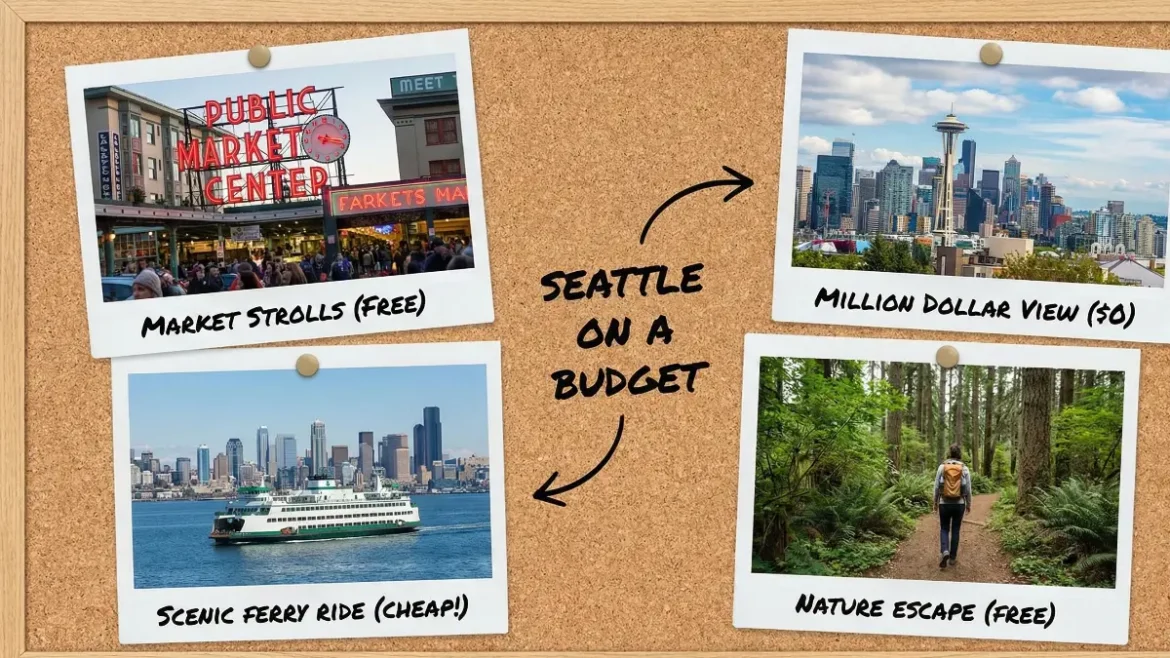
1. Pike Place Market (The Right Way)

  • Cost: Free
  • The Hack: Most tourists think Pike Place is a “buy stuff” trap. It’s not. It’s a living museum.
    • Watch the Fish Throwers: It costs nothing to stand at Pike Place Fish Market and watch them hurl salmon.
    • The Gum Wall: Located down the alley (Post Alley). It’s gross, it’s iconic, and it’s free to take a selfie. (BYO gum if you want to contribute).
    • The Secret Garden: Most people miss this. Go behind the market to the “Urban Garden” overlooking the water. It’s quiet and has one of the best sunset views in the city.

2. The Amazon Spheres (Weekend Public Access)

  • Cost: Free (Reservation Required)
  • The Hack: Those giant glass balls in South Lake Union are usually for Amazon employees only. However, on the first and third Saturdays of the month, they open to the public for free.
  • How to do it: You must book a ticket online exactly 15 days in advance. They “sell out” in minutes. Set an alarm.

3. The Frye Art Museum

  • Cost: Always Free
  • The Vibe: Located on First Hill, the Frye is a stunning museum that has offered free admission since day one (it was in the founder’s will). The collection focuses on 19th-century German art and contemporary installations. It’s warm, quiet, and has a great cafe.

4. The Center for Wooden Boats

  • Cost: Free
  • The Hack: Located at South Lake Union. You can walk the docks and look at the historic boats for free anytime.
  • The “Sunday Sail”: Every Sunday, volunteer skippers take people out on Lake Union for free. You just have to show up early (around 10 AM) to sign up for a slot.

🌲 Views & Nature (Better Than the Space Needle)

Why pay for a view when the city is built on hills?

5. Kerry Park (The Postcard Shot)

  • Cost: Free
  • The Vibe: This is the view. If you have seen a photo of the Space Needle with the city and mountain behind it, it was taken here.
  • Pro Tip: Go at sunrise. Sunset is packed with influencers and tripods. Sunrise is just you and the joggers.

6. Discovery Park Loop Trail

  • Cost: Free
  • The Vibe: A 534-acre wilderness inside the city. The Loop Trail (2.8 miles) takes you through deep forest, across meadows, and down to a sandy beach with a lighthouse. It feels like you drove 3 hours into the mountains.

7. The New Waterfront Park (Overlook Walk)

  • Cost: Free
  • The Update: Completed recently, the new pedestrian bridge connects Pike Place Market directly to the waterfront. It offers sweeping views of the ferry terminal and the Olympic Mountains. It is the best new public space in the city.

8. Gas Works Park

  • Cost: Free
  • The Vibe: An old coal gasification plant turned into a park. The rusted industrial machinery is steampunk perfection. The hill (Kite Hill) offers the best view of the downtown skyline across the lake.

9. Kubota Garden

  • Cost: Free
  • The Vibe: A stunning 20-acre Japanese garden in South Seattle (Rainier Beach). Unlike the Seattle Japanese Garden (which charges a fee), Kubota is a public park and is totally free. It features red bridges, waterfalls, and massive ponds.

🚢 Cheap Thrills (Under $10)

If you have a little bit of cash, these are the best value-for-money activities in 2026.

10. The West Seattle Water Taxi

  • Cost: ~$5.75 (Adult with ORCA Card)
  • The Hack: Forget the $40 Argosy Harbor Cruise. The Water Taxi runs from Pier 50 to Alki Beach. It takes 15 minutes, has an outdoor deck, and gives you the exact same views of the skyline from the water.
  • Bonus: Once you land in West Seattle, a free shuttle bus takes you to the beach.

11. Washington State Ferry to Bainbridge (Walk-On)

  • Cost: ~$9.45 (Westbound only; return is free!)
  • The Hack: Walking onto the ferry is cheap. You get a 35-minute cruise across the Puget Sound. On a clear day, you see whales, seals, and Mount Rainier. Walk into the town of Winslow, grab an ice cream, and ride back for free.

12. Seattle Pinball Museum

  • Cost: ~$20 (All you can play)
  • The Vibe: Located in the International District. You pay one entry fee, and every machine in the building is set to “Free Play.” You can play vintage machines from the 1960s to modern Star Wars tables for hours.

13. Dick’s Drive-In

  • Cost: ~$5.00 for a Deluxe
  • The Vibe: You cannot visit Seattle without eating a bag of Dick’s. It’s a cultural institution. The menu hasn’t changed in decades. The burgers are cheap, greasy, and delicious. Open late.

🎨 Culture & Knowledge Hacks

14. The “First Thursday” Art Walk

  • Cost: Free
  • The Hack: On the first Thursday of every month, the galleries in Pioneer Square open their doors from 5 PM to 9 PM. It’s a massive street party.
  • Bonus: The Seattle Art Museum (SAM) offers free admission on First Thursdays (though special exhibits may still cost extra).

15. Seattle Public Library (Central Branch)

  • Cost: Free
  • The Vibe: The architecture alone is worth the trip. Designed by Rem Koolhaas, it looks like a futuristic spaceship.
  • The Hack: Take the neon yellow escalators all the way to the 10th floor “Reading Room” for a quiet, stunning view of the city atrium.

16. The “Museum Pass” (Library Card Trick)

  • Cost: Free
  • The Hack: If you know a local with a library card (or if you move here and get one), you can reserve “Museum Passes” online. These grant free entry to the Museum of Pop Culture (MoPOP), the Aquarium, and the Museum of Flight. They are limited and book up fast, but they save you $30-$40 per person.

🚶 Free Walking Tours (Self-Guided)

17. The University of Washington Cherry Blossoms

  • When: Late March / Early April
  • The Vibe: The Quad at UW explodes with pink cherry blossoms. It is breathtaking. It costs nothing to walk through, but expect crowds.
  • Pro Tip: Go at 7:00 AM on a Tuesday to get a photo without 500 people in the background.

18. The Arboretum Waterfront Trail

  • Cost: Free
  • The Vibe: The Washington Park Arboretum has a “marsh trail” where you walk on floating boardwalks over the water and through the lily pads. It’s fantastic for bird watching.

19. Chinatown-International District (ID) Tour

  • Cost: Free (unless you buy dumplings)
  • The Vibe: Wander through Hing Hay Park (watch people doing Tai Chi in the morning) and visit the Historic Panama Hotel Tea Room (which has a glass floor looking down into the belongings left by Japanese Americans during WWII internment—a somber but important history).

🛍️ Window Shopping (That is Actually Fun)

20. Uwajimaya Market

  • Cost: Free to browse
  • The Vibe: A massive Asian grocery store in the ID. It has live fish tanks, an incredible food court, and aisles of snacks you’ve never seen before. It’s a sensory overload in the best way.

21. Archie McPhee

  • Cost: Free to look
  • The Vibe: Located in Wallingford. It is a novelty shop selling rubber chickens, bacon-flavored floss, and squirrel underpants. It is basically a museum of the weird. You will laugh for 30 minutes straight just reading the packaging.

22. REI Flagship Store

  • Cost: Free
  • The Vibe: The massive REI in South Lake Union has a climbing wall and a walking trail inside the property. It’s a temple to the outdoors. Even if you don’t buy gear, it’s fun to wander through the “forest” in the middle of the city.

Final Budget Tips for 2026

  • Skip the Uber: The Light Rail ($3) is your best friend.
  • Drink Tap Water: Seattle has some of the best tap water in the world (straight from the Cedar River watershed). Don’t buy bottled water.
  • Happy Hours: Seattle takes Happy Hour seriously (usually 4 PM – 6 PM). You can get half-price oysters and cheap beer if you time your dinner right.

Seattle doesn’t have to bankrupt you. Grab an ORCA card, put on your walking shoes, and go enjoy the views that cost absolutely nothing.

December 23, 2025 0 comments
0 FacebookTwitterPinterestEmail
Seattle WA, Emerald City, Seattle wiki, living in Seattle, moving to Seattle, Seattle neighborhoods, cost of living Seattle, Seattle tech jobs, things to do in Seattle, Space Needle, Pike Place Market, Seattle public transit, Seattle weather, best restaurants Seattle, Seattle nightlife, Seattle startups, Downtown Seattle, Capitol Hill Seattle, Seattle coffee culture, Seattle events
Neighborhoods

Seattle’s Best Vibe Zones: A 2026 Guide to Nightlife, Arts & Culture (Capitol Hill to Georgetown)

by Team Seattle Wiki December 23, 2025
written by Team Seattle Wiki

If you only look at the shiny glass towers of South Lake Union, you might think Seattle has lost its soul to corporate tech behemoths. You might think the city that birthed Jimi Hendrix, Nirvana, and the grunge movement has been sanitized into a giant, expensive office park.

You would be wrong.

The soul of Seattle hasn’t disappeared; it just moved. It thrives in specific pockets of the city—neighborhoods that resisted the bland uniformity of modern development and doubled down on their unique, weird, and vibrant identities. We call these “Vibe Zones.”

These are the places where you don’t just live; you exist. They are where the best murals are painted, where the music is loudest, where the food is most inventive, and where you can still find the gritty, authentic energy that put Seattle on the cultural map.

As we head into 2026, these are the four essential neighborhoods holding down the culture of the Emerald City.


1. Capitol Hill: The Neon Heartbeat

If Seattle had a Brooklyn, this would be it. Capitol Hill is the undisputed epicenter of nightlife, LGBTQ+ culture, and counter-culture energy. It is dense, loud, and unapologetically intense.

The Vibe: Walking down the Pike/Pine corridor on a Friday night feels like walking through a live-action music video. The air smells like street tacos and expensive cannabis. The sidewalks are overflowing with people hopping between bars, underground clubs, and late-night pizza joints. It is the most diverse and expressive neighborhood in the city, marked by the iconic rainbow crosswalks that act as its spiritual center.

Key Spots & Experiences:

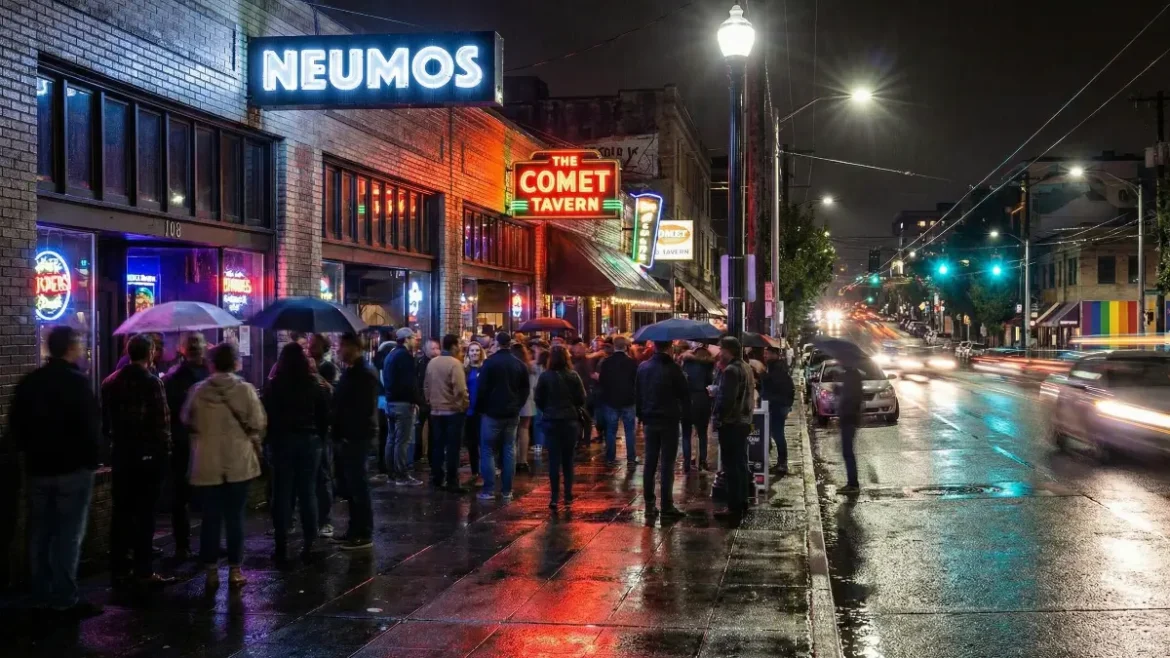
  • The Pike/Pine Corridor: The main drag. It’s home to legendary music venues like Neumos, where you can see the next big indie band before they blow up. Across the street is The Comet Tavern, a former dive bar that—despite being cleaned up a bit—still holds onto its rock-and-roll roots.
  • Cal Anderson Park: This isn’t just a patch of grass; it’s the neighborhood’s living room. On a sunny day, it’s packed with people playing dodgeball, picnicking, and protesting. It’s the beating heart of the community’s civic life.
  • Elliott Bay Book Company: An enormous, independent bookstore with creaky wooden floors and a fantastic cafe inside (Little Oddfellows). It’s a quiet sanctuary in the middle of the chaos and hosts readings from major authors almost daily.

Living Here: Living on “The Hill” means you never need a car (the Light Rail station is right in the center) and you are never bored. The trade-off is noise. If your apartment faces Pike Street, buy industrial-grade earplugs. You will hear drunken karaoke renditions of “Bohemian Rhapsody” at 2 AM every weekend.


2. Ballard: The Scandi-Cool Brewery Capital

Once a sleepy Scandinavian fishing village, Ballard has transformed into one of the trendiest spots in the Pacific Northwest without losing its maritime grit.

The Vibe: Ballard feels like a separate town that just happens to be attached to Seattle. The vibe is mature hipster meets salty sea captain. It’s famous for having the highest concentration of breweries per square mile nearly anywhere on Earth. The aesthetic is brick buildings, industrial warehouses converted into taprooms, and a working waterfront where fishing boats still dock.

Key Spots & Experiences:

  • The Brewery District: You could spend a month here and not hit every brewery. Start at Reuben’s Brews (for award-winning IPAs) and waddle your way to Stoup Brewing or Urban Family. Most are family and dog-friendly, with food trucks parked outside.
  • Ballard Avenue NW: This tree-lined street is one of the most beautiful in the city. It’s packed with incredible restaurants like The Walrus and the Carpenter (famous oysters) and boutique shops selling everything from vintage denim to high-end kitchenware.
  • The Ballard Locks: A feat of engineering where you can watch massive boats being raised and lowered between the Puget Sound and the freshwater lakes. In the summer, you can watch salmon fighting their way up the fish ladder.
  • The Sunday Farmers Market: This is not just a market; it’s a weekly ritual. The entire neighborhood shuts down Ballard Ave to buy local produce, flowers, and artisanal bread. It is arguably the best farmers market in the entire state.

Living Here: Ballard boasts an incredibly strong sense of community. People settle down here. The massive downside is the commute. There is no Light Rail, and getting downtown during rush hour can take 45 minutes by bus. You live in Ballard because you plan to spend your weekends in Ballard.


3. Fremont: The Self-Proclaimed “Center of the Universe”

Fremont’s motto is “De Libertas Quirkas”—Freedom to be Peculiar. It wears its weirdness as a badge of honor.

The Vibe: Located just east of Ballard along the ship canal, Fremont is artsy, whimsical, and proudly eccentric. While it now hosts major tech offices for Google and Adobe, it fights hard to keep its funky soul. It’s the kind of place where public art isn’t just decoration; it’s a statement.

Key Spots & Experiences:

  • The Fremont Troll: You cannot visit Seattle without paying tribute to the Troll. This massive mixed-media sculpture crushes an actual Volkswagen Beetle under a bridge. It’s the ultimate photo op.
  • The Lenin Statue: Yes, there is a giant bronze statue of Vladimir Lenin standing on a street corner. It was rescued from pop art obscurity in Slovakia and brought here. It’s controversial, bizarre, and very Fremont.
  • The Fremont Solstice Parade: Held every June, this parade is famous for its hundreds of naked bicyclists painted head-to-toe in elaborate artistic designs right before the main floats start. It is a joyful, chaotic celebration of summer.
  • The Sunday Market: A quirky flea market that feels more like a bazaar. You can find vintage clothes, strange antiques, and global street food.

Living Here: Fremont offers a perfect balance. It is incredibly walkable, located right on the Burke-Gilman bike trail, and has a fun nightlife scene that is less intense than Capitol Hill. It’s popular with young tech workers who want a short commute to the Google campus but still want to live somewhere with character.


4. Georgetown: The Gritty Industrial Arts District

If the other neighborhoods on this list are too polished or gentrified for you, head south to Georgetown.

The Vibe: This is Seattle’s oldest neighborhood and its last true bastion of industrial grit. Surrounded by Boeing fields, train tracks, and highways, Georgetown is raw, dusty, and incredibly cool. It’s a haven for artists, punks, mechanics, and anyone who prefers a dive bar over a mixology lounge. It feels authentically blue-collar and creative.

Key Spots & Experiences:

  • The Trailer Park Mall: A collection of vintage Airstream trailers converted into tiny boutique shops selling handmade jewelry, vintage records, and oddities. It’s only open on weekends and is pure Americana kitsch.
  • Fantagraphics Bookstore & Gallery: The headquarters of one of the world’s most important publisher of alternative comics and graphic novels. A must-visit for art lovers.
  • Georgetown Art Attack: On the second Saturday of every month, the neighborhood’s galleries and studios open their doors for a massive, free art walk that feels like a block party.
  • Jules Maes Saloon: One of the oldest bars in Seattle. It’s a classic, no-frills spot for a cheap beer and a game of pool.

Living Here: Georgetown is cheaper than most “cool” neighborhoods, but it comes with environmental noise. You will hear airplanes from the nearby King County International Airport and heavy freight trains rumbling through at all hours. It is not for light sleepers, but for those who love it, the authenticity is worth the noise.


Final Verdict: Finding Your Frequency

Seattle isn’t a monolith. It’s a collection of villages, each with its own frequency.

  • If you want loud music, inclusivity, and 2 AM pizza, head to Capitol Hill.
  • If you want craft beer, oysters, and a maritime feel, go to Ballard.
  • If you want whimsical art and naked bike rides, choose Fremont.
  • If you want gritty authenticity and underground art, seek out Georgetown.

The best way to experience them is to pick one, go there around 6 PM on a Friday, put your phone away, and just follow the noise.

December 23, 2025 0 comments
0 FacebookTwitterPinterestEmail
Seattle WA, Emerald City, Seattle wiki, living in Seattle, moving to Seattle, Seattle neighborhoods, cost of living Seattle, Seattle tech jobs, things to do in Seattle, Space Needle, Pike Place Market, Seattle public transit, Seattle weather, best restaurants Seattle, Seattle nightlife, Seattle startups, Downtown Seattle, Capitol Hill Seattle, Seattle coffee culture, Seattle events
Neighborhoods

Seattle Tech Hubs Guide 2026: Where to Live if You Work at Amazon, Microsoft, or Google

by Team Seattle Wiki December 23, 2025
written by Team Seattle Wiki

Welcome to “Cloud City.”

If you are moving to Seattle in 2026, there is a very high statistical probability that your paycheck is coming from one of five companies: Amazon, Microsoft, Google, Meta, or Apple.

Seattle is no longer just a Boeing town or a grunge music hub; it is undisputed global headquarters of cloud computing. But landing that six-figure job is the easy part. The hard part is figuring out where to live so that your commute doesn’t crush your soul.

Seattle geography is tricky. The city is squeezed between bodies of water, meaning there are limited ways to get from Point A to Point B. If you live on the wrong side of a bridge from your office, you could be spending 90 minutes a day staring at brake lights on I-5.

In 2026, the “Golden Rule” of Seattle real estate remains unchanged: Live on the same side of Lake Washington that you work on.

This guide breaks down the major tech hubs, the vibe of the surrounding neighborhoods, and the realistic costs of living near the motherships.


Hub 1: South Lake Union (SLU) & Denny Triangle

The “Amazonia” Core

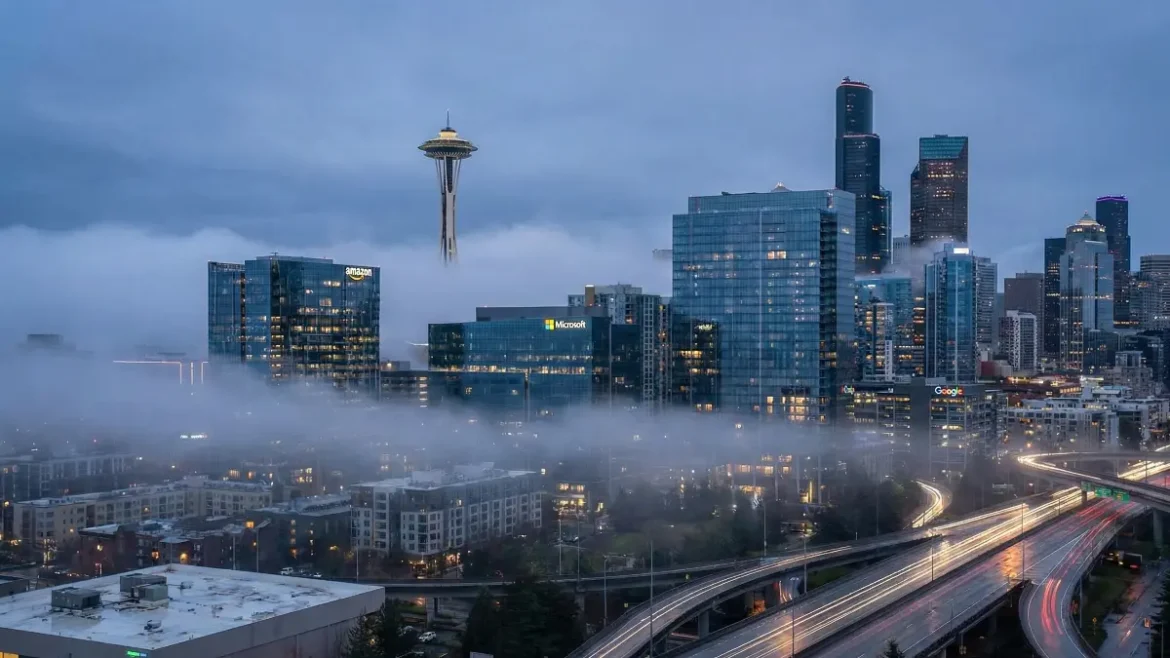
Fifteen years ago, South Lake Union was mostly warehouses and cheap parking lots. Today, it is a shimmering canyon of glass and steel, almost entirely occupied by Amazon.

If you work at Amazon HQ (Day 1 Tower, the Spheres, etc.), Apple’s Seattle offices, or the massive new Meta buildings in the Denny Triangle, this is your epicenter.

The Vibe: Corporate & Convenient

SLU is incredibly clean, modern, and efficient. At lunchtime, the sidewalks are flooded with thousands of workers wearing blue badges. It has excellent fast-casual food (think $18 gourmet salads), high-end gyms, and immediate access to Lake Union for summer kayaking.

However, it can feel soulless. It is a neighborhood built for work. After 6:00 PM and on weekends, it empties out significantly. It lacks the gritty history of Capitol Hill or the cozy charm of Ballard.

Where to Live if You Work Here

Option A: South Lake Union (The High-Rises) Live right above the office.

  • The Vibe: Luxury hotel living. Rooftop dog parks, concierges, package lockers, and AC (standard in new builds).
  • The Commute: A 5-minute walk.
  • 2026 Rent: Expect to pay $2,800 – $3,500 for a nice 1-bedroom.

Option B: Capitol Hill (Nightlife & Culture) Located just up the hill to the east.

  • The Vibe: The cultural heart of the city. Historic brick buildings, vibrant LGBTQ+ scene, incredible restaurants, and loud nightlife.
  • The Commute: A 15-minute walk downhill to work (or a quick ride on the Streetcar).
  • 2026 Rent: $2,300 – $2,700 for older buildings; higher for new construction.

Option C: Lower Queen Anne (Uptown) Located to the west, near the Space Needle.

  • The Vibe: A mix of tourists (near Seattle Center) and quiet residential streets. Lots of older apartment stock mixed with new condos.
  • The Commute: A 20-minute walk or a quick bus ride on the D-Line.
  • 2026 Rent: $2,200 – $2,600.

Hub 2: The Eastside (Redmond & Bellevue)

Microsoft Country & The Meta Expansion

Across Lake Washington lies “The Eastside.” This is suburban tech sprawl at its finest. It is cleaner, safer, has better-rated public schools, and is generally more conservative than Seattle proper.

The Vibe: Upscale Suburbia

Downtown Bellevue has transformed into “Little Manhattan,” with skyscrapers, luxury shopping (Bravern, Bellevue Square), and high-end dining. Redmond, home to the massive Microsoft campus, feels more like a sprawling office park surrounded by trees and suburbs. Meta (Facebook) also has a massive presence in the Spring District of Bellevue.

The 2026 Game Changer: The 2 Line

The biggest news for Eastside tech workers in 2026 is the full operation of the Sound Transit 2 Line (East Link Light Rail). It now connects Redmond Tech station directly to downtown Bellevue and across the lake to downtown Seattle.

This changes the commute dynamic, making living in Seattle and working on the Eastside slightly less painful—but driving across the bridges is still a nightmare.

Where to Live if You Work Here

Option A: Downtown Bellevue (Urban Luxury)

  • The Vibe: Incredibly expensive, incredibly clean. High-rise condos that rival downtown Seattle prices. Great if you want city amenities without the “grit” of Seattle.
  • The Commute: Minutes to Meta; 15 minutes to Microsoft.
  • 2026 Rent: $3,000+ for a luxury 1-bedroom.

Option B: Redmond (The Microsoft Bubble)

  • The Vibe: Quiet suburbia. Lots of apartment complexes geared towards tech families and H1B visa holders. Very diverse, great Indian and Asian grocery stores, and excellent parks (Marymoor Park).
  • The Commute: You are practically living on campus.
  • 2026 Rent: $2,400 – $2,800 for newer garden-style apartments.

Option C: Kirkland (Waterfront Charm)

  • The Vibe: Located north of Bellevue on the lakefront. It feels like a resort town in the summer. It has a cute walkable downtown area with restaurants and beaches.
  • The Commute: A short drive to Google’s Kirkland campus or Microsoft.
  • 2026 Rent: $2,600 – $3,200 (higher near the water).

Hub 3: Fremont & The “Silicon Canal”

Google, Adobe, and Tableau

Just north of downtown Seattle, separated by the Lake Washington Ship Canal, sits a cluster of tech giants that prefer a quirkier vibe than SLU.

Google has a massive campus right on the water in Fremont. Adobe is nearby, and Tableau (Salesforce) is just across the water.

The Vibe: “Center of the Universe”

Fremont’s self-proclaimed motto is “De Libertas Quirkas” (Freedom to be Peculiar). It is famous for its naked bicyclists at the Solstice Parade and a giant statue of a troll under a bridge. It’s artsy, walkable, filled with breweries, and secretly very wealthy.

Where to Live if You Work Here

Option A: Fremont (Live Where You Work)

  • The Vibe: Fun, active, and young. The Burke-Gilman trail runs right through it, making bike commuting easy.
  • The Commute: Walk to Google.
  • 2026 Rent: $2,400 – $2,800.

Option B: Ballard (The Brewery District) Located just to the west.

  • The Vibe: A former Scandinavian fishing village turned hipster haven. It has the best Farmers Market in the city, dozens of breweries, and great restaurants along Ballard Ave.
  • The Commute: A 15-minute bike ride or bus ride (the “Missing Link” of the bike trail is still a debate in 2026, but it’s rideable).
  • 2026 Rent: $2,300 – $2,600.

Option C: Wallingford (Quiet Craftsman Homes) Located to the east.

  • The Vibe: More residential and family-oriented. Beautiful old Craftsman homes, tree-lined streets, and access to Gas Works Park.
  • The Commute: A quick walk or bike ride to the Google campus.
  • 2026 Rent/Housing: Expensive to buy; renting a floor of a house often costs $2,500+.

The Final Verdict: Choosing Your Badge Color

When choosing where to live in Seattle in 2026, your employer badge dictates your geography.

  • If you wear a Blue Badge (Amazon): Live in South Lake Union, Capitol Hill, or Queen Anne. Do not attempt to live on the Eastside unless you enjoy 2 hours of traffic a day.
  • If you work at Microsoft/Meta (Eastside): Live in Bellevue, Redmond, or Kirkland. Embrace the suburban life. The schools are better, and the parking is free.
  • If you are a Googler (Fremont): You have the best setup. Live in Fremont or Ballard and enjoy the best mix of city vibes and neighborhood charm.

Seattle is an incredible place to build a career in tech. Just make sure your apartment isn’t on the wrong side of the water.

December 23, 2025 0 comments
0 FacebookTwitterPinterestEmail
Seattle WA, Emerald City, Seattle wiki, living in Seattle, moving to Seattle, Seattle neighborhoods, cost of living Seattle, Seattle tech jobs, things to do in Seattle, Space Needle, Pike Place Market, Seattle public transit, Seattle weather, best restaurants Seattle, Seattle nightlife, Seattle startups, Downtown Seattle, Capitol Hill Seattle, Seattle coffee culture, Seattle events
Neighborhoods

Top 5 Quietest Seattle Neighborhoods: A Family-Friendly Guide for 2026 (Safety, Schools & Vibe)

by Team Seattle Wiki December 23, 2025
written by Team Seattle Wiki

If your image of living in Seattle involves loud nightlife on Capitol Hill or dodging Amazon workers on scooters in South Lake Union, you aren’t wrong—that is one version of the city.

But there is another Seattle.

There is a Seattle where the loudest noise at 9 PM is a foghorn in the distance or an owl hooting in an old-growth Douglas fir tree. There are neighborhoods where people actually know their neighbors, where kids still ride bikes to school, and where the “vibe” is decidedly sleepy rather than sleepless.

As we head into 2026, the demand for these quiet pockets is skyrocketing. Remote work means many tech professionals no longer need to live within walking distance of a downtown office tower. Families are prioritizing safety, good schools, and a sense of community over proximity to the trendiest new bar.

But finding “quiet” in a booming metropolis comes with trade-offs—usually involving commute times or housing prices.

As a long-time local who has navigated the noisy parts and settled into the quiet ones, here is the definitive guide to the 5 best neighborhoods for families and anyone seeking peace in the Emerald City.

📊 The “Quiet Score” Cheat Sheet (2026 Data)

Before diving deep, here is a quick comparison of our top picks based on key metrics for families and peace-seekers.

Note: Rents are for 3-Bedroom Homes/Townhomes, not apartments.

NeighborhoodThe VibeQuiet Score (1-10)Avg 3-Bed RentCommute to Downtown (Rush Hour)
MagnoliaThe 1950s Suburb10/10$4,500+40-55 Mins
Upper Queen AnneOld Money & Views8/10$4,20025-35 Mins
West SeattleBeach Town Pride8/10$3,80030-45 Mins (Water Taxi is faster)
WallingfordCraftsman & Strollers7/10$3,90025-35 Mins
LaurelhurstElite & Exclusive9/10$5,500+45-60 Mins

1. Magnolia: The Island Apart

If safety and silence are your absolute top priorities, start your search in Magnolia.

Geographically, Magnolia feels like an island. It is connected to the rest of Seattle by only three bridges over train tracks and waterways. This natural barrier keeps pass-through traffic to a minimum. Nobody drives through Magnolia to get somewhere else; you only go there if you live there.

The Vibe

Magnolia feels like it is stuck in a pleasant 1950s time warp. The streets are wide, lined with mature trees and pristine mid-century modern homes. It has a small “Village” center (McGraw Street) with a few cute restaurants, an ice cream shop, and a bookstore, but zero nightlife.

Why it’s Great for Families

  • Discovery Park: This is the crown jewel of Seattle parks. At 534 acres, it is a massive wilderness on the edge of the city, featuring miles of forest trails, beaches, a lighthouse, and stunning views of the Olympic Mountains. Having this in your backyard is life-changing for kids and dog owners.
  • Safety: Magnolia consistently ranks as one of the safest neighborhoods in the entire city for both violent and property crime.

The Trade-Off (The Commute)

The isolation is a double-edged sword. Getting out of Magnolia during rush hour can be frustrating. You are bottlenecked by the three exit bridges, and then you have to navigate the often-congested Interbay corridor to get downtown. If you work in South Lake Union five days a week, the commute might break you.

  • Best For: Remote workers, doctors working at nearby medical centers, or families who prioritize safety above all else.

2. West Seattle (The Junction & Genesee): The Beach Town

West Seattleites are fiercely loyal. You will often hear them say, “West Seattle is Best Seattle,” and they might have a point.

Because it is separated from downtown by the Duwamish Waterway, West Seattle has developed its own distinct, self-sufficient identity. It feels less like a neighborhood of Seattle and more like a laid-back California beach town that got lost on its way north.

The Vibe

It is friendly, unpretentious, and outdoorsy. While Alki Beach gets crowded with tourists in the summer, the residential hills above it (like the Genesee and Admiral districts) are incredibly quiet, offering sweeping views of the downtown skyline and Puget Sound.

Why it’s Great for Families

  • The “California” Lifestyle: You have immediate access to Alki Beach for volleyball, bonfires, and long walks, plus Lincoln Park for forested trails and a heated saltwater outdoor pool.
  • The Junction: The main drag along California Avenue has everything you need—grocery stores, a great Sunday Farmers Market, independent shops, and family-friendly breweries—so you rarely need to “leave the island.”
  • Community Feel: Perhaps because it felt cut off during the years the West Seattle Bridge was closed for repairs, the sense of community here is stronger than almost anywhere else. People actually talk to each other at the grocery store.

The Trade-Off (The distance)

Even with the bridge open, West Seattle feels psychologically far from the rest of the city. If your friends live in Capitol Hill or Ballard, you won’t see them as often.

  • Pro Tip for Commuters: If you work downtown, take the West Seattle Water Taxi. It’s a 15-minute boat ride across the bay that drops you off right at the ferry terminal downtown. It is the most scenic and stress-free commute in America.

3. Upper Queen Anne: Classic Seattle Elegance

It is vital to make a distinction here: Lower Queen Anne (Uptown) is busy, loud, and sits next to the Climate Pledge Arena. Upper Queen Anne is a different world entirely.

Sitting atop one of the highest hills in the city, Upper Queen Anne is where old Seattle money lives.

The Vibe

Stately, established, and very quiet. The neighborhood is famous for its classic architecture—stunning Queen Anne Victorians and Craftsman mansions line the steep streets. Because it’s at the top of a massive hill, it doesn’t get random foot traffic.

Why it’s Great for Families

  • The “Ave”: Queen Anne Avenue North at the top of the hill is a perfect, walkable strip of high-end grocery stores (Trader Joe’s, Safeway, and Ken’s Market), bakeries, and charming bistros. It’s bustling during the day but shuts down early.
  • The Views: Kerry Park is here. It offers the world-famous postcard view of the Space Needle with Mount Rainier behind it. While the park itself gets touristy, the surrounding streets are peaceful and offer similar vistas from your living room window.
  • Schools: The local public schools (like Coe Elementary) are highly rated and sought after.

The Trade-Off (The Hills and Cost)

  • The Hills: They are no joke. If you rely on a stroller or plan to bike for transportation, be warned: these hills are incredibly steep. You need strong legs and good brakes.
  • The Price: This is one of Seattle’s most expensive zip codes. Buying a family home here often starts around the $1.5 million mark in 2026.

4. Wallingford: The Happy Medium

If Magnolia is too isolated and Queen Anne is too stuffy, Wallingford is just right.

Located north of Lake Union, Wallingford sits perfectly between the bohemian energy of Fremont and the college-town vibe of the U-District, but it manages to stay quieter than both.

The Vibe

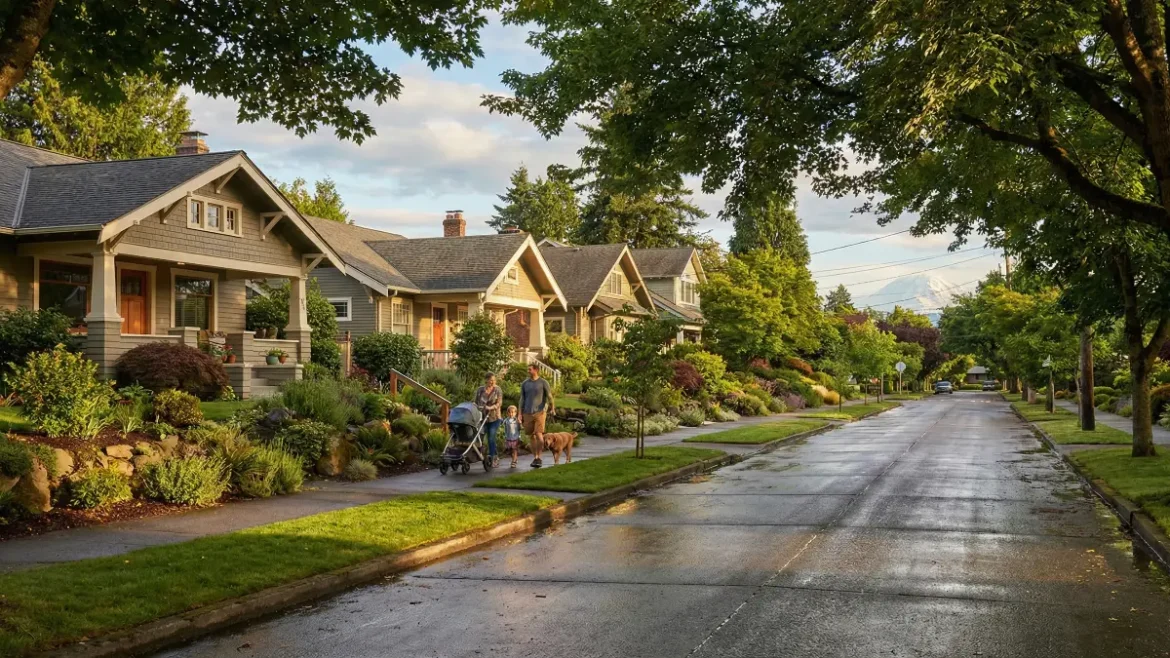
Wallingford feels like a classic American neighborhood. It is filled with beautiful 1920s Craftsman bungalow homes with wide front porches. It is the kind of place where you see endless streams of parents pushing strollers, people gardening on Saturday mornings, and dogs wearing raincoats.

Why it’s Great for Families

  • Gas Works Park: Located on the south edge of the neighborhood, this former gasification plant is now one of the city’s best parks for kite flying, picnics, and watching the sunset over the city skyline.
  • Walkability: The main corridor on 45th Street has great amenities, including the famous Archie McPhee novelty store, solid Thai restaurants, and a QFC grocery store.
  • Access to Green Lake: You are just a short walk or bike ride north to Green Lake, the city’s most popular spot for a 3-mile jog or walk around the water.

The Trade-Off (The I-5 Noise)

Wallingford is bordered to the east by Interstate-5. The closer you live to the highway, the louder the constant hum of traffic will be. When looking at homes here, visit the street during rush hour to check the noise levels, especially if you have sensitive sleepers.


5. Laurelhurst: Elite Seclusion

If budget is not your primary concern and you want exclusive, quiet luxury, Laurelhurst is the answer.

Tucked away on the shores of Lake Washington near the University of Washington, Laurelhurst is perhaps the most exclusive neighborhood in the city (bill gates used to live nearby).

The Vibe

Private, manicured, and silent. Many homes here have private docks on the lake. The streets are winding and confusing if you don’t live there, which keeps outsiders away. It has a private “beach club” for residents that feels like something out of a different era.

Why it’s Great for Families

  • Safety and Stability: It has incredibly low crime rates and very little rental turnover. People buy houses here and stay for 30 years, creating a stable, albeit somewhat insular, community.
  • Proximity to Children’s Hospital: Seattle Children’s Hospital is located right next door, making this a top choice for medical professionals or families with high medical needs.

The Trade-Off (Exclusivity)

It can feel a bit stuffy and disconnected from the “real” Seattle. There are almost no commercial businesses inside the neighborhood boundaries; you have to drive out to the U-District or University Village for groceries or a coffee.


Final Verdict: Choosing Your Quiet Corner

Finding a friendly, quiet neighborhood in Seattle in 2026 is about balancing your tolerance for commuting against your need for silence.

  • Choose Magnolia if: You work remotely and want maximum safety and nature (Discovery Park).
  • Choose West Seattle if: You want a strong community feel, beach access, and don’t mind being geographically separated from the city core.
  • Choose Upper Queen Anne if: You want classic Seattle architecture, stunning views, and have a higher budget.
  • Choose Wallingford if: You want a walkable, stroller-friendly neighborhood that is still close to the action but not in it.

Whatever you choose, remember that “friendly” in Seattle often takes time. The famous “Seattle Freeze” (where locals are polite but distant) is real, even in quiet neighborhoods. The best way to break the ice is usually having a dog or kids—the two universal conversation starters in the Pacific Northwest.

December 23, 2025 0 comments
0 FacebookTwitterPinterestEmail
Seattle WA, Emerald City, Seattle wiki, living in Seattle, moving to Seattle, Seattle neighborhoods, cost of living Seattle, Seattle tech jobs, things to do in Seattle, Space Needle, Pike Place Market, Seattle public transit, Seattle weather, best restaurants Seattle, Seattle nightlife, Seattle startups, Downtown Seattle, Capitol Hill Seattle, Seattle coffee culture, Seattle events
Living & Essentials

Seattle Public Transport Guide 2026: Mastering the Orca Card, Light Rail & Ferries

by Team Seattle Wiki December 23, 2025
written by Team Seattle Wiki

If you try to drive in downtown Seattle at 5:00 PM, you will regret it.

Between the rain, the one-way streets, and the infamous “Mercer Mess,” driving in the Emerald City is a test of patience. Fortunately, Seattle has one of the best public transit systems in the US, and it is getting a massive upgrade in 2026.

Whether you are a new tech worker commuting to South Lake Union or a tourist trying to get from SeaTac Airport to Pike Place Market, this guide is your survival manual.

We will cover everything from the Orca Card hacks to the unwritten rules of riding the Link Light Rail.

💳 The Golden Ticket: The ORCA Card

The One Regional Card for All (ORCA) is the only card you need. It works on the Light Rail, Metro Buses, Streetcars, Water Taxis, and even the Washington State Ferries.

Do Not Pay Cash

While you can pay cash on buses, it is a bad idea for three reasons:

  1. No Change: If the fare is $3.00 and you have a $5 bill, the driver cannot give you change. You just tipped the city $2.
  2. No Transfers: Cash users do not get a “transfer slip.” If you take a bus and then switch to the train, you have to pay full price twice. ORCA card users get a 2-hour free transfer window.
  3. It’s Slow: Fumbling for quarters annoys everyone behind you.

How to Get an ORCA Card in 2026

  • The Physical Card ($3 fee): You can buy one at the vending machines at any Link Light Rail station (including the Airport).
  • The App (myORCA): Download the myORCA app immediately. You can instantly load money onto your card using Apple Pay or a credit card.
    • Warning: The physical card readers on buses sometimes take 24 hours to recognize money loaded via the website, but the app is usually instant.
  • Employer Passport: If you work for Amazon, Microsoft, Google, or the University of Washington, your badge likely doubles as an unlimited ORCA card. Check with HR before you buy one.

🚆 The Backbone: Link Light Rail

The Link is the spine of Seattle transit. It is clean, fast, and immune to traffic jams. In 2026, the system is expanding significantly.

1 Line (The Green Line)

This is the main line running North-South.

  • Route: Connects Lynnwood (North) $rightarrow$ Northgate $rightarrow$ University of Washington $rightarrow$ Capitol Hill $rightarrow$ Downtown $rightarrow$ SeaTac Airport $rightarrow$ Angle Lake (South).
  • Frequency: Trains come every 8–10 minutes during the day.
  • Cost: Flat fare of $3.00 per trip (Adults). Youth (under 18) ride FREE.

2 Line (The Eastside Line)

This is the new game-changer for 2026.

  • The “Crosslake” Connection: As of early 2026, the bridge connection across Lake Washington is finally opening. You can now ride the train from Bellevue or Redmond (Microsoft) directly into Downtown Seattle without transferring to a bus.
  • Route: Redmond Tech $\rightarrow$ Bellevue Downtown $\rightarrow$ Mercer Island $\rightarrow$ International District.

🚨 Crucial Light Rail Etiquette

  • Tap On, Tap Off: You must tap your ORCA card on the yellow readers on the platform before you board and after you exit.
    • Why? Fare enforcement officers patrol random trains. The fine for not tapping is $124.
  • The “Seattle Shuffle”: When the train arrives, let people exit before you try to enter. Stand to the side of the doors, not directly in front of them.

✈️ SeaTac Airport Transfer: Link vs. Uber

This is the most common question we get: “Should I Uber or take the train from the airport?”

Here is the math for a trip to Downtown Seattle:

FeatureLink Light RailUber / Lyft
Cost$3.00$55 – $80
Time38 Minutes (Reliable)35-60 Minutes (Traffic dependent)
ConvenienceModerate (5 min walk to garage)High (Curbside pickup)
LuggageEasy (Level boarding)Easy (Trunk space)

The Verdict: Unless you have 4+ suitcases or are arriving at 2 AM, take the Light Rail. It is significantly cheaper and often faster during rush hour.

  • How to find it: Follow the signs in the terminal for “Link Light Rail.” You will walk through the parking garage to the station.

🚌 The Bus System: King County Metro

When the train doesn’t go where you need, the bus does. Seattle has two types of buses:

1. RapidRide (The Red Buses)

These are the “Subway on wheels.” They have specific letter names (e.g., E Line, C Line).

  • Features: They come every 10–15 minutes, have Wi-Fi, and use all-door boarding.
  • How to Board: You can tap your card at the station reader on the sidewalk before the bus arrives, then enter through the back doors.

2. Local Buses (Green/Blue/Teal)

These serve specific neighborhoods.

  • How to Board: You must enter through the front door and tap your card next to the driver. To exit, pull the yellow cord.
  • The “Thank You” Rule: In Seattle, it is mandatory to yell “Thank you!” to the driver as you exit the back door. If you don’t, people will know you are not a local.

2026 Fare Update

As of late 2025, the standard adult fare for King County Metro is $3.00.

  • Note: If you transfer from the Bus to the Light Rail within 2 hours, your $3.00 bus fare counts as a credit. You won’t be charged extra unless the second ride is more expensive.

⛴️ Washington State Ferries: The Commuter Cruise

Riding a ferry is a daily commute for thousands, but a tourist attraction for everyone else.

The Routes

  • Seattle to Bainbridge Island: The most popular route. Takes 35 minutes. Great for a day trip to walk around Winslow Way.
  • Seattle to Bremerton: Takes 60 minutes.
  • West Seattle Water Taxi: A smaller foot-passenger-only boat that runs from Downtown (Pier 50) to Alki Beach.

Pricing (Walk-On vs. Drive-On)

  • Walk-On Passenger: ~$9.45 (Westbound only; the return trip to Seattle is usually free for passengers!).
  • Drive-On: ~$17.00 – $22.00 + Passenger fare.
  • Pro Tip: Do not drive onto the ferry unless you absolutely have to. The wait times for cars can be 2–3 hours in summer. Walking on takes zero wait time.

⚠️ 2026 Update: The Monorail & ORCA Changes

The Seattle Center Monorail is a fun 90-second ride from downtown (Westlake Center) to the Space Needle.

New Rule for 2026:

Previously, if you used an ORCA card, you got a free transfer. This has changed.

As of January 1, 2026, the Monorail no longer accepts “free transfers” from E-purse (cash value) users.

  • What this means: If you ride the Light Rail ($3) and then jump on the Monorail ($3.50), you will pay $6.50 total. The transfer credit is gone for pay-per-ride users.
  • Exception: If you have an unlimited Monthly Pass (from work), the ride is still covered.

📱 Essential Apps for Your Phone

Do not rely on Apple Maps alone. Download these local favorites:

  1. OneBusAway: The most accurate real-time tracker for Seattle buses. It tells you exactly how many minutes until the bus arrives (and if it is delayed).
  2. Transit Go Ticket: If you forget your ORCA card, you can buy digital tickets on this app and show your phone screen to the driver.
  3. Giglio (or Google Maps): Still the best for planning the route itself (A to B).

🛡️ Safety on Transit

Seattle transit is generally safe, but like any big city, it has issues.

  • The “First Car” Rule: If you are riding the Light Rail at night (after 9 PM), always sit in the very first car (closest to the driver operator). It is consistently the cleanest and safest car.
  • Bus Stops: Avoid waiting at 3rd & Pike/Pine bus stops late at night. Walk two blocks north or south to a less crowded stop.
  • Text Security: Sound Transit has a text line for security issues. Save this number: 206-398-5268. You can text them discreetly if you see harassment or a safety hazard.

Final Thoughts

Seattle’s transit system is the key to enjoying the city without going broke on parking fees. The $3 ORCA card investment will save you hundreds of dollars in Uber fees during your first week.

Just remember: tap on, tap off, and always thank the bus driver.

December 23, 2025 0 comments
0 FacebookTwitterPinterestEmail
Seattle WA, Emerald City, Seattle wiki, living in Seattle, moving to Seattle, Seattle neighborhoods, cost of living Seattle, Seattle tech jobs, things to do in Seattle, Space Needle, Pike Place Market, Seattle public transit, Seattle weather, best restaurants Seattle, Seattle nightlife, Seattle startups, Downtown Seattle, Capitol Hill Seattle, Seattle coffee culture, Seattle events
Living & Essentials

Is Seattle Safe in 2026? A Honest Neighborhood-by-Neighborhood Safety Guide

by Team Seattle Wiki December 23, 2025
written by Team Seattle Wiki

If you Google “Is Seattle Safe?”, you will get two very different answers.

The national news might convince you that Seattle is a lawless wasteland of burning police cars and rampant shoplifting. Meanwhile, a local real estate blog will tell you it’s a paradise of cherry blossoms and friendly baristas, with “just a little grit.”

As we head into 2026, the reality is somewhere in the messy middle.

I have lived in this city for over a decade. I have walked home alone in Capitol Hill at 2 AM, and I have had my car window smashed in broad daylight in Ballard. I have seen the city at its absolute worst during the pandemic, and I am watching it slowly, painfully find its footing again in 2026.

This is not a sugar-coated tourism brochure. This is the SeattleWiki 2026 Safety Report, based on the latest police data, neighborhood trends, and the unwritten rules every local knows but rarely says out loud.

📊 The 2026 Snapshot: The Data vs. The Vibe

Before we get into which street corners to avoid, let’s look at the hard numbers. The narrative that Seattle is “dying” is statistically false, but the “Seattle Freeze” now extends to our crime rates.

According to the latest 2025 Year-End Crime Report released by the Seattle Police Department and King County data:

  • Violent Crime is Dropping: Homicides in Seattle dropped by 36% in 2025 compared to the previous year. Shootings and aggravated assaults are also trending downward. You are statistically very unlikely to be physically attacked in Seattle compared to cities like Memphis, Detroit, or even nearby Portland.
  • Property Crime is Still the King: This is the bad news. Seattle consistently ranks in the top 5 US cities for property crime. We are talking about car prowls (break-ins), package theft, and burglary. In 2025, property crime rates here were roughly 184% higher than the national average.

The Takeaway: You probably won’t get mugged, but you absolutely might get your backpack stolen if you leave it in the backseat of your Subaru.


🗺️ The Neighborhood Breakdown: Safe vs. “Sketchy”

Seattle is a city of “micro-climates” when it comes to safety. You can be on a beautiful, safe street lined with $2 million homes, walk three blocks, and find yourself in an open-air drug market.

Here is the honest 2026 assessment of the major zones.

🔴 The “Keep Your Head Up” Zones (High Alert)

These areas aren’t “no-go zones,” but they require street smarts.

1. 3rd & Pine / 3rd & Pike (Downtown Core) If there is one specific intersection to avoid in Seattle, this is it. For decades, this has been the epicenter of open-air drug dealing and erratic behavior. While the city has increased police presence in 2025, it remains unpredictable.

  • Safety Tip: If you are commuting, use the Westlake Light Rail station entrances inside the shopping centers (Pacific Place or Westlake Center) rather than the street-level entrances on 3rd Ave.

2. Belltown (After Dark) Belltown is trendy, filled with condos and great bars. But at night, the vibe shifts aggressively. It has one of the highest concentrations of assaults because of the nightlife crowd mixing with a high homeless population.

  • Verdict: Fine for dinner, but take an Uber home if it’s past midnight.

3. The International District (Chinatown/ID) This neighborhood is culturally rich and has the best food in the city, but it has suffered disproportionately since 2020. Public safety issues, including encampments and vandalism, are visible here.

  • Verdict: Go for lunch (please support the businesses!), but be vigilant at night, especially near the 12th & Jackson bus stop.

4. Aurora Avenue North (The Strip) Specifically the stretch from 85th St to 145th St. This is historically known for illicit activity and motels. It is not a place you generally walk around for leisure.

🟢 The “Safe Havens” (Low Crime)

If you are looking for a quiet place to live or walk your dog at night, these neighborhoods consistently rank as the safest:

1. Magnolia Physically separated from the rest of the city by a bridge, Magnolia feels like a 1950s suburb. Violent crime is almost non-existent here. It’s quiet, wealthy, and very boring—which is exactly what some people want.

2. Upper Queen Anne While Lower Queen Anne (near the Climate Pledge Arena) has some car break-ins, the top of the hill is incredibly safe. The steep hill acts as a natural barrier to crime (criminals hate walking up hills too).

3. West Seattle (The Junction & Alki) Despite the “island” vibe, West Seattle remains very safe, particularly the residential streets away from the immediate beach strip. It has a strong community watch culture.

4. Green Lake / Roosevelt Very family-friendly. The loop around the lake is safe to jog, even in the evening, because it is always populated with other runners.


🚗 The “Bipping” Epidemic: Protecting Your Car

“Bipping” is slang for smashing a car window to grab valuables. In Seattle, this is not a crime of opportunity; it is a sport.

If you bring a car to Seattle in 2026, you must follow these rules religiously.

  1. The “Nothing Visible” Rule: Do not leave anything in your car. Not a charging cable, not a few coins in the cup holder, and definitely not a bag. I once had a window smashed for a bag of dirty gym clothes.
  2. Out-of-State Plates: Thieves target cars with non-Washington plates because they assume you have luggage. If you are visiting, park in a secured garage, not on the street overnight.
  3. The “Club”: Yes, the steering wheel lock from the 90s is back. With Kia and Hyundai thefts still high in 2025, having a visible deterrent actually works.

🚆 Public Transit Safety: Is the Light Rail Safe?

With the Link Light Rail expanding to Lynnwood and Redmond in 2025/2026, more people are riding than ever.

  • The Reality: The Light Rail is generally safe, especially during commute hours (7 AM – 7 PM).
  • The Changes: In 2025, Sound Transit deployed significantly more Transit Security Officers (TSOs). You will see them patrolling trains and platforms more often than in previous years.
  • The “Bus vs. Train” Debate: The Light Rail is safer and cleaner than the bus system. If you take the bus (especially the E-Line or the 7), expect to see people slumped over or using drugs in the back. It is usually sad rather than dangerous, but it can be jarring for newcomers.

Pro Tip: On the Light Rail, sit in the first car (near the operator). It is always the safest and cleanest car on the train.


⛺ Homelessness vs. Danger: Understanding the Difference

You cannot talk about Seattle safety without talking about the homelessness crisis.

In 2026, you will still see tents. You will see people in mental health crises shouting at the air.

  • Crucial Distinction: Most unhoused people in Seattle are struggling with addiction or poverty and are not aggressive toward passersby. The “danger” is often overstated by outsiders.
  • The Protocol: If you see someone erratic, simply cross the street. Do not engage, do not stare, and do not take photos (which is incredibly rude and escalatory). Just keep moving.

🛡️ Urban Safety Gear: What Should You Carry?

I am not suggesting you walk around in tactical gear, but carrying basic safety tools is common here, especially for women or night-shift workers.

  1. High-Lumen Flashlight: Seattle is dark. In winter, the sun sets at 4:15 PM. A powerful flashlight (500+ lumens) is better than a weapon—it blinds a potential aggressor and illuminates dark sidewalks.
  2. Personal Alarm (Birdie): These keychains emit a deafening siren when pulled. They are great for drawing attention if you feel threatened on the Light Rail.
  3. Gel Pepper Spray: If you choose to carry spray, buy the Gel version, not the mist. Seattle is windy; mist will blow back in your face. Gel shoots in a straight stream.

🚨 Emergency Resources (Save These Numbers)

If you are in immediate danger, always call 911. However, Seattle has alternative numbers for non-emergencies which often get a faster response.

  • Non-Emergency Police Line: (206) 625-5011 (For reporting a break-in that already happened).
  • Community Safety & Health (Mental Health Crisis): 988.
  • Find It, Fix It App: Download this immediately. It’s the official city app to report graffiti, dumped trash, or broken streetlights. The city actually responds to these requests surprisingly fast.

The Verdict

Is Seattle safe? Yes, mostly. It is safer than St. Louis, New Orleans, or Baltimore. But it is not the sleepy fishing village it was in the 90s. Treat it like any major coastal city: Keep your head on a swivel, protect your property, and maybe don’t walk through that one alley in Belltown at 2 AM.

Stay safe out there, and welcome to the neighborhood.

December 23, 2025 0 comments
0 FacebookTwitterPinterestEmail
Seattle WA, Emerald City, Seattle wiki, living in Seattle, moving to Seattle, Seattle neighborhoods, cost of living Seattle, Seattle tech jobs, things to do in Seattle, Space Needle, Pike Place Market, Seattle public transit, Seattle weather, best restaurants Seattle, Seattle nightlife, Seattle startups, Downtown Seattle, Capitol Hill Seattle, Seattle coffee culture, Seattle events
Living & Essentials

Cost of Living in Seattle 2026: A Realistic Budget for Single Tech Workers vs. Families

by Team Seattle Wiki December 23, 2025
written by Team Seattle Wiki

If you are planning a move to the Emerald City in 2026, you have likely heard two conflicting rumors. The first is that Seattle is a booming tech paradise where everyone makes six figures and hikes on weekends. The second is that a single latte costs $8 and you will need a roommate until you are 40.

The truth, as usual, lies somewhere in the “gray” middle.

Yes, Seattle is expensive. According to recent data, the cost of living in Seattle is roughly 49% higher than the national average, with housing costs sitting a staggering 97% above the norm. But looking at a generic index doesn’t tell you the whole story. It doesn’t tell you that you might save $5,000 a year because Washington has no state income tax, or that living in West Seattle versus South Lake Union can change your monthly budget by $1,000.

I’ve lived in three different Seattle neighborhoods over the last decade—from a cramped studio in Belltown to a family home in Ballard. I have tracked every penny, from utility spikes in the winter to the hidden costs of car ownership.

This is the definitive, unvarnished guide to what it actually costs to live in Seattle in 2026.

⚡ The “Too Long; Didn’t Read” Summary

If you are skimming this during your lunch break, here is the bottom line. This table breaks down a realistic monthly budget for two common scenarios: a single professional (renting) and a family of four (renting a house).

Expense CategorySingle Tech WorkerFamily of 4 (2 Kids)
Rent / Housing$2,150 (1-Bed Apt)$4,800 (3-Bed Home)
Groceries$450$1,250
Utilities (Electric/Water/Trash)$200$350
Internet & Mobile$120$220
Transport (No Car)$108 (Orca Pass)$250 (Passes + Occasional Uber)
Transport (With Car)$650 (Payment + Gas + Parking)$950 (2 Cars + Insurance)
Dining & Entertainment$400$600
Health & Misc$200$500
TOTAL MONTHLY~$4,278~$8,920

The Verdict: To live comfortably (meaning you can save for retirement and take a vacation), a single person needs an annual salary of roughly $90,000. A family of four generally needs a combined household income of $145,000+ to feel secure.


🏠 Housing: The Biggest Line Item

Let’s be honest: your rent check is going to eat up the majority of your paycheck. Seattle’s housing market is competitive, especially in the “tech hub” zones. However, prices vary wildly depending on how much commute pain you are willing to tolerate.

1. Renting: Neighborhood by Neighborhood

Here is what you can expect to pay for a decent 1-Bedroom Apartment (approx. 650 sq. ft.) in 2026.

  • South Lake Union (The Amazon Hub): $2,800 – $3,200/mo
    • The Vibe: This is “Tech Central.” You live in a glass high-rise with a concierge, rooftop dog park, and AC (a rarity in Seattle).
    • Pros: Walk to work if you are at Amazon/Google. Very clean.
    • Cons: Soulless. It feels like a corporate campus, and restaurants close early.
  • Capitol Hill (Nightlife District): $2,250 – $2,600/mo
    • The Vibe: The cultural heart of the city. Historic brick buildings, rainbow crosswalks, and the best nightlife.
    • Pros: You never need a car. The food scene is incredible.
    • Cons: It is loud. Parking is a nightmare ($300/mo for a spot).
  • Ballard (The Trendy Spot): $2,260 – $2,500/mo
    • The Vibe: Feels like a separate, hip maritime town. Famous for its Sunday Farmers Market and dozen breweries.
    • Pros: Amazing community feel. Great for couples and young families.
    • Cons: The commute to downtown is terrible (45 mins by bus).
  • Northgate / Lake City (The Budget Option): $1,700 – $1,900/mo
    • The Vibe: More suburban, lots of strip malls, but the Light Rail connects you to the city fast.
    • Pros: Affordable. You get more square footage.
    • Cons: Less “cool” factor. You might need a car here.

2. The “Hidden” Costs of Renting

The sticker price on Zillow is rarely what you actually pay. When budgeting, add these mandatory fees:

  • Parking: $200 – $350 per month (Downtown/Capitol Hill).
  • Pet Rent: $50/month per pet + a $300 deposit.
  • WSG (Water/Sewer/Garbage): Unlike other cities, Seattle landlords often bill this back to tenants based on occupancy. Expect to pay $80 – $120 per person.
  • Move-In Costs: By law, landlords can charge First Month + Last Month + Security Deposit. That means you might need $7,000 cash upfront just to get the keys.

3. Buying: Is it Possible?

If you are hoping to buy, prepare for a battle. The median home price in Seattle hovers around $850,000, with decent single-family homes often starting at $1 Million.

  • Property Taxes: Washington has high property taxes (~1.025%) to make up for the lack of income tax. On a million-dollar home, that’s $10,000 a year in taxes alone.

🛒 Food & Groceries: The Inflation Reality

Food prices in Seattle are notoriously high. Because the city is geographically isolated (tucked into a corner of the map), shipping costs drive up the price of produce and goods.

The Grocery Breakdown

  • High-End (Whole Foods, PCC Markets): If you shop exclusively here, budget $700/month per person. PCC is a local co-op chain that is amazing but very expensive.
  • Mid-Range (QFC, Safeway, Fred Meyer): The standard. Budget $450/month. Watch out for QFC prices; they vary by neighborhood (Capitol Hill QFC is pricier than North Seattle QFC).
  • Budget (Trader Joe’s, Grocery Outlet, WinCo): If you are smart, you can get your bill down to $300/month.
    • Pro Tip: WinCo (located just north in Edmonds) is employee-owned and dirt cheap. If you have a car, do a bulk run there once a month.

Dining Out & The “Seattle Surcharge”

Going out to eat has changed. A standard burger and fries at a sit-down pub will cost you $18 – $22. A craft beer is $8 – $10.

  • The “Living Wage” Surcharge: Many restaurants now add a 3% – 20% surcharge to the bill to cover healthcare and wages. Always check the menu footer so you aren’t surprised.
  • The Coffee Budget: We take coffee seriously. A 12oz latte averages $6.50. If you buy one every workday, that is $1,600 a year just on bean water.

🚆 Transport: Car vs. No Car

This is the single biggest financial decision you will make.

Option A: The Car-Free Life (Recommended for Savings)

If you live and work within the city limits (Seattle proper), you do not need a vehicle.

  • The Orca Card: This is your golden ticket. It works on the Link Light Rail, Metro Buses, Streetcars, and even the Water Taxi.
    • Cost: $108/month for a regional pass.
    • Note: nearly every major tech employer (Amazon, Microsoft, Google, Meta) gives this to employees for free. Check your benefits package immediately.
  • Link Light Rail: It runs from the Airport (SeaTac) all the way north to Lynnwood and East to Redmond. It is fast, clean, and cheap ($3.00 max fare).
  • Ride Share: Uber and Lyft are expensive here due to city regulations. A 15-minute ride from Capitol Hill to Downtown can cost $25 during rush hour.

Option B: Owning a Car

If you love hiking or live in the suburbs, you need a car. But it will punish your wallet.

  • Gas Prices: Washington consistently has some of the highest gas prices in the USA, often rivalling California ($4.50 – $5.50/gallon).
  • Registration (The RTA Tax): This shocks everyone. To fund the Light Rail, car tabs are taxed based on the value of your car. If you drive a new Tesla, your yearly registration tabs could be $800 – $1,200.
  • Parking Tickets: Seattle parking enforcement is ruthless. A standard ticket is $47, and they will ticket you for parking too close to a driveway (less than 5 feet).

💸 Taxes: The Good & The Bad

This is the section that justifies the high rent.

The Good: No State Income Tax

Washington is one of the few states with 0% State Income Tax.

  • The Math: If you earn $100,000 in California or New York, you might pay $6,000 – $8,000 in state taxes. In Seattle, you keep that money. For high earners (tech workers), this effectively “pays” for the higher rent.

The Bad: High Sales Tax

To make up for it, the government taxes spending.

  • Sales Tax: The rate in Seattle is 10.25%.
  • This applies to almost everything: clothes, electronics, restaurant food, and furniture.
  • Exception: Unprepared grocery store food (eggs, milk, bread) is tax-free.

🌧️ Seasonal Expenses: The “Rain Tax”

Living in the Pacific Northwest requires specific gear. You cannot just wear a cotton hoodie and sneakers, or you will be miserable for 8 months of the year.

The “Seattle Starter Pack” Budget

When you first move, set aside $500 – $700 for these essentials:

  1. A Quality Rain Shell ($150+): Do not buy an umbrella. Locals don’t use them (they blow away in the wind). Buy a hooded waterproof shell from Patagonia, REI, or Columbia.
  2. Waterproof Boots ($120+): You will be walking through puddles. Blundstones or Hunter boots are the unofficial uniform.
  3. Vitamin D & SAD Lamps ($50): Seasonal Affective Disorder (SAD) is real. From November to June, the sky is gray. A therapy light on your desk is a medical necessity, not a luxury.
  4. AC Unit ($300): “Seattle doesn’t need AC.” False. Summers now regularly hit 90°F+ (32°C). Most apartments do not have central air. Buy a portable unit in May before they sell out.

💡 5 Actionable Tips to Save Money

If those numbers scared you, here is how the locals make it work.

  1. Buy Nothing Groups: Seattle has a massive “Buy Nothing” culture on Facebook. People give away high-end furniture, clothes, and kitchenware for free. Join your neighborhood group immediately.
  2. Happy Hour is King: Dinner is expensive, but Seattle invents great Happy Hours. You can often get $8 food and $5 drinks if you eat between 4 PM and 6 PM.
  3. The Library Pass: The Seattle Public Library card gets you free museum passes (Museum of Flight, MoPOP) that usually cost $30+.
  4. Shop Asian Markets: For produce and seafood, skip Whole Foods and go to Uwajimaya or H-Mart. The quality is better and the prices are often lower.
  5. Ditch the Gym: Seattle is nature’s gym. Instead of paying $100/month for a club, buy a Discover Pass ($30/year) and go hiking.

Final Verdict: Is Seattle Worth the Cost?

There is no sugar-coating it: Seattle is an expensive city. It requires a high income to enjoy fully.

However, the trade-off is unique. You are paying for access to a booming job market without an income tax. You are paying for clean air, drinkable tap water that tastes like glacier melt, and the ability to drive 45 minutes and be deep in the Cascade mountains.

If you are a single tech worker earning over $90,000, Seattle offers an incredible quality of life. If you are moving here on a budget of $50,000, it will be a grind—unless you are willing to live with roommates and embrace the frugal, outdoor lifestyle.

December 23, 2025 0 comments
0 FacebookTwitterPinterestEmail
Newer Posts
Older Posts

Popular Posts

  • 12 Best Seattle Coffee Places in 2026

    January 21, 2026
  • Golden Globe Winners 2026 | Seattle Wiki

    January 11, 2026
  • Washington State New Laws 2026: The Complete Guide for Employees, Renters, and Drivers

    January 9, 2026
  • Capitol Hill Seattle: The Ultimate 2026 Guide to Nightlife, Culture & The Pike/Pine Corridor

    January 6, 2026
  • Fremont Seattle: The Ultimate 2026 Neighborhood Guide

    January 5, 2026
  • Ballard Seattle: The Ultimate Neighborhood Guide for 2026

    January 5, 2026
  • NFL Playoff Bracket 2026: Washington’s Seahawks Clinch #1 Seed & The Road to Super Bowl LX

    January 4, 2026
  • About Us
  • Privacy Policy
  • Cookie Policy
  • Editorial Policy
  • Affiliate Disclosure
  • Contact Us
  • Sitemap

@2025 – All Right Reserved. Designed and Developed by SeattleWiki.org

Seattle Wiki
  • Home