
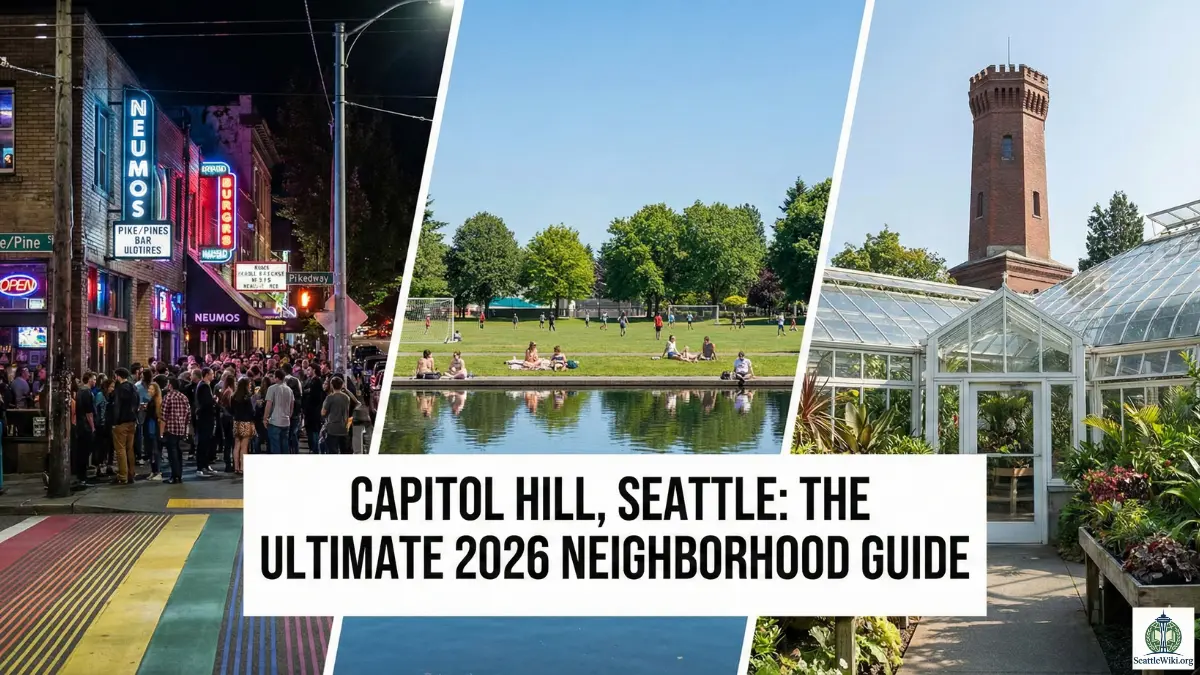
- Everything You Need to Know About Seattle’s Most Vibrant, Dense, and Cultural District
- The Vibe: A Tale of Two Hills
- Top Things to Do in Capitol Hill (The Essentials)
- Nightlife & The “Pike/Pine” Scene
- Dining: From “Dick’s” to Fine Dining
- Shopping: The “Shop Local” Ethos
- Living in Capitol Hill: 2026 Real Estate Reality
- Major Events
- Hidden Gems (Off the Beaten Path)
- Conclusion
- Frequently Asked Questions (FAQ)
Everything You Need to Know About Seattle’s Most Vibrant, Dense, and Cultural District
If Seattle has a beating heart, it is undoubtedly Capitol Hill.
Located just east of downtown, separated by the I-5 freeway, Capitol Hill is the densest, loudest, and most culturally significant neighborhood in the Pacific Northwest. In 2026, it remains the epicenter of the city’s LGBTQ+ community, its indie music scene, and its culinary innovation.
This is the neighborhood that never sleeps. It is where grunge history meets modern tech wealth, where drag queens perform brunch shows next to high-end steakhouses, and where the sidewalks are packed from 10:00 AM to 2:00 AM every single day.
For visitors, Capitol Hill is often the highlight of their trip. For locals, it is the “living room” of the city. Whether you are looking for the best dance clubs, the most iconic bookstores, or simply a patch of grass to people-watch, “Cap Hill” (as locals call it) delivers.
This comprehensive wiki guide covers the distinct zones of the hill, the legendary Pike/Pine nightlife, the Volunteer Park gems, and the reality of living in Seattle’s most energetic zip code in 2026.
The Vibe: A Tale of Two Hills
To understand Capitol Hill, you must understand that it is actually two very different neighborhoods stitched together.
The Pike/Pine Corridor & Broadway (The Energy) The southern end (anchored by Pike Street, Pine Street, and Broadway) is the “Brooklyn of Seattle.” It is neon-lit, gritty, and incredibly fast-paced. This is where you find the clubs, the tattoo parlors, the vintage stores, and the massive Capitol Hill Light Rail Station plaza, which has become a central meeting point since its full maturity in the mid-2020s.
North Capitol Hill (The Quiet Wealth) Go north of Aloha Street, and the vibe changes instantly. This area, leading up to Volunteer Park, is known as “Millionaire’s Row.” It features stunning 100-year-old mansions, quiet tree-lined streets, and some of the best views of the Space Needle. It is a reminder that before it was a party hub, this was the city’s original wealthy suburb.
Top Things to Do in Capitol Hill (The Essentials)
Capitol Hill isn’t about “tourist attractions” in the traditional sense; it is about parks, culture, and hanging out.
1. Cal Anderson Park
Located at the heart of the neighborhood, Cal Anderson Park is Seattle’s most famous urban green space.
- The Vibe: It is the city’s front lawn. On any sunny day in 2026, it is packed with sunbathers, dodgeball leagues, and impromptu musicians.
- The Features: The park includes a massive reflecting pool (great for photos), the Bobby Morris Playfield, and designated “festival streets” that are closed to cars on weekends.
2. Volunteer Park & The Water Tower
A short walk north brings you to Volunteer Park, a grand, Olmsted-designed masterpiece.
- The Water Tower: Climb the 107 steps to the top of the historic brick water tower for a free 360-degree view of Seattle, the Sound, and the mountains. It is arguably better than the Space Needle view because it includes the Space Needle.
- The Conservatory: A stunning Victorian-style glasshouse filled with orchids, cacti, and tropical plants. A perfect escape on a rainy day.
- Seattle Asian Art Museum (SAAM): Located right in the park, this Art Deco gem houses one of the finest collections of Asian art in the US.
3. The Jimi Hendrix Statue
Located on Broadway just outside the Blick Art Materials store, this bronze statue of Seattle’s most famous son is a pilgrimage site for rock fans. It is usually adorned with flowers, scarves, or guitar picks left by fans.
Nightlife & The “Pike/Pine” Scene
In 2026, Capitol Hill remains the undisputed nightlife capital of the Pacific Northwest. The “Pike/Pine Corridor” is a designated arts district that encourages music venues and preserves historic auto-row facades.
The Music Venues
- Neumos: The anchor of the scene. If an indie band is breaking out, they are playing here. It’s loud, sweaty, and legendary.
- The Crocodile (New Location): After moving from Belltown a few years ago, the “Croc” has established itself firmly in the Hill’s ecosystem with a multi-stage venue.
The Clubs & Bars
- Q Nightclub: A world-class electronic music venue with a sound system that rivals clubs in Berlin or Ibiza.
- Unicorn: A carnival-themed bar famous for its distinct decor and “Mimosas Cabaret” drag brunch.
- Rhein Haus: A massive German-style beer hall with indoor bocce ball courts.
- The LGBTQ+ Scene: The Hill is the historic home of Seattle’s gay community. The Cuff, Queer/Bar, and Wildrose (one of the oldest lesbian bars on the West Coast) remain vital community hubs.
Dining: From “Dick’s” to Fine Dining
Capitol Hill offers the widest culinary range in the city.
The Iconic Cheap Eat:
- Dick’s Drive-In (Broadway): You cannot write a guide to Seattle without mentioning Dick’s. This walk-up burger stand is a cultural institution.
- The Ritual: Go after a concert at 1:00 AM, stand in line, and order a “Deluxe, fries, and a shake.” It is the great equalizer of Seattle—tech billionaires and starving musicians all eat here.
The “New Classics”:
- Spinasse: Widely considered one of the best Italian restaurants in the region, famous for its handmade Tajarin pasta.
- Oddfellows Café: The quintessential “hipster” café. High ceilings, communal tables, and excellent coffee make it the freelance writer’s headquarters.
- Tacos Chukis: A hidden gem (literally, it’s often upstairs or down a hallway) serving the best street-style tacos in the city.
Shopping: The “Shop Local” Ethos
You won’t find many big chains here. Capitol Hill is fiercely independent.
- Elliott Bay Book Company: A massive, independent bookstore with soaring wood beams and a cozy café (Little Oddfellows). It is the literary soul of Seattle.
- Glossier / Glossy Retail: The Pike/Pine corridor is home to trendy, direct-to-consumer brands that open physical showrooms.
- Vintage Hunting: Stores like Crossroads Trading and Lifelong Thrift are treasure troves for 90s grunge fashion, which is perpetually in style here.
Living in Capitol Hill: 2026 Real Estate Reality
Living on the Hill is a lifestyle choice that prioritizes access over space.
The “Micro-Housing” Trend Capitol Hill pioneered the “Apodment” or micro-studio trend. In 2026, many newer buildings offer ultra-efficient 250-square-foot studios.
- Who lives here: Young tech workers, students from nearby Seattle University and Seattle Central College, and service industry professionals.
- The Cost: Rents are high. Expect to pay a premium for being walkable to the Light Rail station.
Transit Connectivity The Capitol Hill Station (Link Light Rail) is the busiest station outside of downtown.
- To Downtown: 4 minutes.
- To U-District (UW): 4 minutes.
- To Sea-Tac Airport: 40 minutes direct.
- The Streetcar: The “First Hill Streetcar” connects the neighborhood to the International District, though it is slower than walking in traffic.
Major Events
Capitol Hill hosts the city’s wildest street festivals.
- Capitol Hill Block Party (July): A three-day music festival where they fence off the Pike/Pine streets. The main stage is literally built in the middle of the road. It draws huge national acts.
- Seattle PrideFest (June): The massive Pride parade ends at the Seattle Center, but the party is on Capitol Hill. Broadway closes down for a weekend of street fairs, drag performances, and celebration.
Hidden Gems (Off the Beaten Path)
- Streissguth Gardens: Tucked away on the steep stairs of North Capitol Hill (near St. Mark’s Cathedral), this is a small, public woodland garden that feels like a fairy tale.
- The Starbucks Roastery: Okay, it’s not “hidden,” but it is unique. This is the “Willy Wonka” factory of coffee located on Pike St. It’s a massive tourist draw, but locals go for the cocktail bar inside (the Arriviamo Bar).
- Volunteer Park Dahlia Garden: In late summer, this specific patch of the park explodes with color and is a favorite for photographers.
Conclusion
In 2026, Capitol Hill remains the unfiltered id of Seattle. While other neighborhoods might be cleaner (Bellevue) or more historic (Pioneer Square), Capitol Hill is where the culture is created.
It is a neighborhood of contradictions: loud but residential, historic but rapidly modernizing, gritty but expensive. For anyone wanting to understand what Seattle feels like right now, a Friday night walk down Pike Street is mandatory.
Frequently Asked Questions (FAQ)
Q: Is Capitol Hill safe at night? A: The main Pike/Pine corridor is extremely busy and generally safe due to the “safety in numbers” factor. However, like any dense nightlife district, petty crime and altercations can happen late at night. Cal Anderson Park can feel sketchy after dark and is best enjoyed during the day.
Q: Where is the “Rainbow Crosswalk”? A: The famous rainbow crosswalks are located at the intersections of Broadway & Pike and Broadway & Pine. They are a permanent symbol of the neighborhood’s LGBTQ+ identity.
Q: Is parking available in Capitol Hill? A: Parking is notoriously difficult. Street parking is paid and hard to find. It is highly recommended to take the Light Rail or a rideshare. If you must drive, look for paid garages near Seattle Central College.
Q: Can families visit Capitol Hill? A: Yes, especially during the day! Volunteer Park, the Asian Art Museum, and Elliott Bay Book Company are very family-friendly. The vibe shifts significantly to “adult nightlife” after 9:00 PM.
Q: What is the “CHOP/CHAZ” history? A: During the 2020 protests, a few blocks around Cal Anderson Park became the “Capitol Hill Autonomous Zone.” By 2026, the area has fully returned to normal public use, though you may still find street art and murals commemorating the history of social justice movements in the area.