
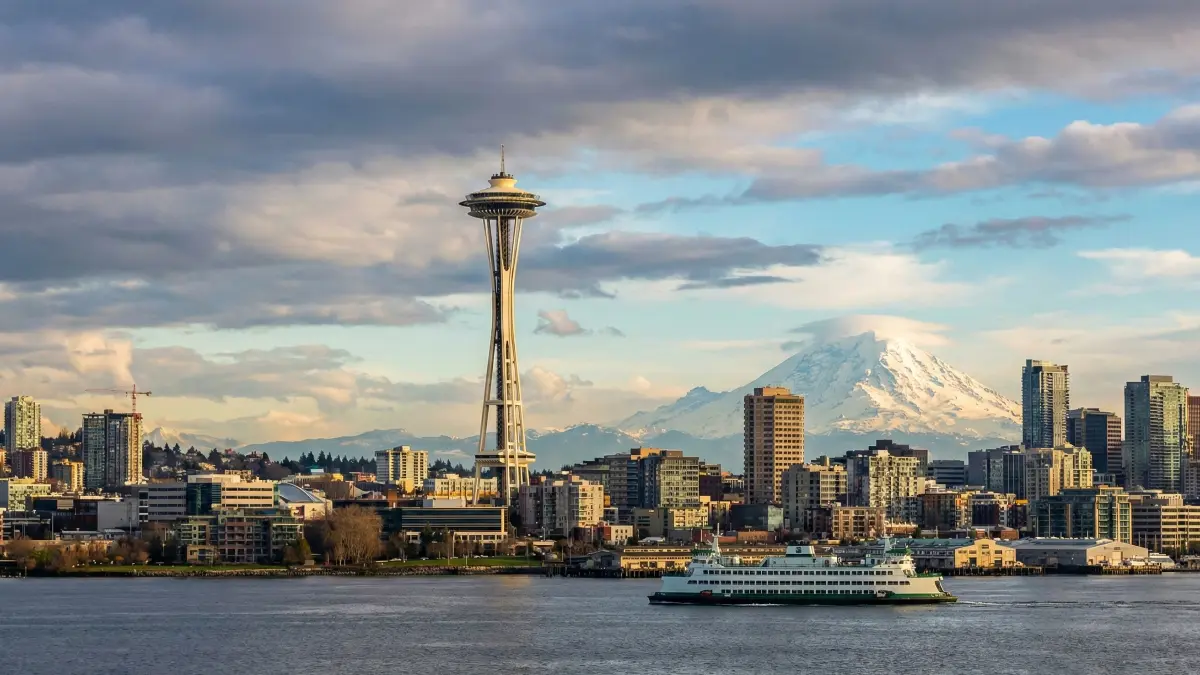
If you are planning a move to the Emerald City in 2026, you have likely heard two conflicting rumors. The first is that Seattle is a booming tech paradise where everyone makes six figures and hikes on weekends. The second is that a single latte costs $8 and you will need a roommate until you are 40.
The truth, as usual, lies somewhere in the “gray” middle.
Yes, Seattle is expensive. According to recent data, the cost of living in Seattle is roughly 49% higher than the national average, with housing costs sitting a staggering 97% above the norm. But looking at a generic index doesn’t tell you the whole story. It doesn’t tell you that you might save $5,000 a year because Washington has no state income tax, or that living in West Seattle versus South Lake Union can change your monthly budget by $1,000.
I’ve lived in three different Seattle neighborhoods over the last decade—from a cramped studio in Belltown to a family home in Ballard. I have tracked every penny, from utility spikes in the winter to the hidden costs of car ownership.
This is the definitive, unvarnished guide to what it actually costs to live in Seattle in 2026.
⚡ The “Too Long; Didn’t Read” Summary
If you are skimming this during your lunch break, here is the bottom line. This table breaks down a realistic monthly budget for two common scenarios: a single professional (renting) and a family of four (renting a house).
| Expense Category | Single Tech Worker | Family of 4 (2 Kids) |
| Rent / Housing | $2,150 (1-Bed Apt) | $4,800 (3-Bed Home) |
| Groceries | $450 | $1,250 |
| Utilities (Electric/Water/Trash) | $200 | $350 |
| Internet & Mobile | $120 | $220 |
| Transport (No Car) | $108 (Orca Pass) | $250 (Passes + Occasional Uber) |
| Transport (With Car) | $650 (Payment + Gas + Parking) | $950 (2 Cars + Insurance) |
| Dining & Entertainment | $400 | $600 |
| Health & Misc | $200 | $500 |
| TOTAL MONTHLY | ~$4,278 | ~$8,920 |
The Verdict: To live comfortably (meaning you can save for retirement and take a vacation), a single person needs an annual salary of roughly $90,000. A family of four generally needs a combined household income of $145,000+ to feel secure.
🏠 Housing: The Biggest Line Item
Let’s be honest: your rent check is going to eat up the majority of your paycheck. Seattle’s housing market is competitive, especially in the “tech hub” zones. However, prices vary wildly depending on how much commute pain you are willing to tolerate.
1. Renting: Neighborhood by Neighborhood
Here is what you can expect to pay for a decent 1-Bedroom Apartment (approx. 650 sq. ft.) in 2026.
- South Lake Union (The Amazon Hub): $2,800 – $3,200/mo
- The Vibe: This is “Tech Central.” You live in a glass high-rise with a concierge, rooftop dog park, and AC (a rarity in Seattle).
- Pros: Walk to work if you are at Amazon/Google. Very clean.
- Cons: Soulless. It feels like a corporate campus, and restaurants close early.
- Capitol Hill (Nightlife District): $2,250 – $2,600/mo
- The Vibe: The cultural heart of the city. Historic brick buildings, rainbow crosswalks, and the best nightlife.
- Pros: You never need a car. The food scene is incredible.
- Cons: It is loud. Parking is a nightmare ($300/mo for a spot).
- Ballard (The Trendy Spot): $2,260 – $2,500/mo
- Northgate / Lake City (The Budget Option): $1,700 – $1,900/mo
- The Vibe: More suburban, lots of strip malls, but the Light Rail connects you to the city fast.
- Pros: Affordable. You get more square footage.
- Cons: Less “cool” factor. You might need a car here.
2. The “Hidden” Costs of Renting
The sticker price on Zillow is rarely what you actually pay. When budgeting, add these mandatory fees:
- Parking: $200 – $350 per month (Downtown/Capitol Hill).
- Pet Rent: $50/month per pet + a $300 deposit.
- WSG (Water/Sewer/Garbage): Unlike other cities, Seattle landlords often bill this back to tenants based on occupancy. Expect to pay $80 – $120 per person.
- Move-In Costs: By law, landlords can charge First Month + Last Month + Security Deposit. That means you might need $7,000 cash upfront just to get the keys.
3. Buying: Is it Possible?
If you are hoping to buy, prepare for a battle. The median home price in Seattle hovers around $850,000, with decent single-family homes often starting at $1 Million.
- Property Taxes: Washington has high property taxes (~1.025%) to make up for the lack of income tax. On a million-dollar home, that’s $10,000 a year in taxes alone.
🛒 Food & Groceries: The Inflation Reality
Food prices in Seattle are notoriously high. Because the city is geographically isolated (tucked into a corner of the map), shipping costs drive up the price of produce and goods.
The Grocery Breakdown
- High-End (Whole Foods, PCC Markets): If you shop exclusively here, budget $700/month per person. PCC is a local co-op chain that is amazing but very expensive.
- Mid-Range (QFC, Safeway, Fred Meyer): The standard. Budget $450/month. Watch out for QFC prices; they vary by neighborhood (Capitol Hill QFC is pricier than North Seattle QFC).
- Budget (Trader Joe’s, Grocery Outlet, WinCo): If you are smart, you can get your bill down to $300/month.
- Pro Tip: WinCo (located just north in Edmonds) is employee-owned and dirt cheap. If you have a car, do a bulk run there once a month.
Dining Out & The “Seattle Surcharge”
Going out to eat has changed. A standard burger and fries at a sit-down pub will cost you $18 – $22. A craft beer is $8 – $10.
- The “Living Wage” Surcharge: Many restaurants now add a 3% – 20% surcharge to the bill to cover healthcare and wages. Always check the menu footer so you aren’t surprised.
- The Coffee Budget: We take coffee seriously. A 12oz latte averages $6.50. If you buy one every workday, that is $1,600 a year just on bean water.
🚆 Transport: Car vs. No Car
This is the single biggest financial decision you will make.
Option A: The Car-Free Life (Recommended for Savings)
If you live and work within the city limits (Seattle proper), you do not need a vehicle.
- The Orca Card: This is your golden ticket. It works on the Link Light Rail, Metro Buses, Streetcars, and even the Water Taxi.
- Cost: $108/month for a regional pass.
- Note: nearly every major tech employer (Amazon, Microsoft, Google, Meta) gives this to employees for free. Check your benefits package immediately.
- Link Light Rail: It runs from the Airport (SeaTac) all the way north to Lynnwood and East to Redmond. It is fast, clean, and cheap ($3.00 max fare).
- Ride Share: Uber and Lyft are expensive here due to city regulations. A 15-minute ride from Capitol Hill to Downtown can cost $25 during rush hour.
Option B: Owning a Car
If you love hiking or live in the suburbs, you need a car. But it will punish your wallet.
- Gas Prices: Washington consistently has some of the highest gas prices in the USA, often rivalling California ($4.50 – $5.50/gallon).
- Registration (The RTA Tax): This shocks everyone. To fund the Light Rail, car tabs are taxed based on the value of your car. If you drive a new Tesla, your yearly registration tabs could be $800 – $1,200.
- Parking Tickets: Seattle parking enforcement is ruthless. A standard ticket is $47, and they will ticket you for parking too close to a driveway (less than 5 feet).
💸 Taxes: The Good & The Bad
This is the section that justifies the high rent.
The Good: No State Income Tax
Washington is one of the few states with 0% State Income Tax.
- The Math: If you earn $100,000 in California or New York, you might pay $6,000 – $8,000 in state taxes. In Seattle, you keep that money. For high earners (tech workers), this effectively “pays” for the higher rent.
The Bad: High Sales Tax
To make up for it, the government taxes spending.
- Sales Tax: The rate in Seattle is 10.25%.
- This applies to almost everything: clothes, electronics, restaurant food, and furniture.
- Exception: Unprepared grocery store food (eggs, milk, bread) is tax-free.
🌧️ Seasonal Expenses: The “Rain Tax”
Living in the Pacific Northwest requires specific gear. You cannot just wear a cotton hoodie and sneakers, or you will be miserable for 8 months of the year.
The “Seattle Starter Pack” Budget
When you first move, set aside $500 – $700 for these essentials:
- A Quality Rain Shell ($150+): Do not buy an umbrella. Locals don’t use them (they blow away in the wind). Buy a hooded waterproof shell from Patagonia, REI, or Columbia.
- Waterproof Boots ($120+): You will be walking through puddles. Blundstones or Hunter boots are the unofficial uniform.
- Vitamin D & SAD Lamps ($50): Seasonal Affective Disorder (SAD) is real. From November to June, the sky is gray. A therapy light on your desk is a medical necessity, not a luxury.
- AC Unit ($300): “Seattle doesn’t need AC.” False. Summers now regularly hit 90°F+ (32°C). Most apartments do not have central air. Buy a portable unit in May before they sell out.
💡 5 Actionable Tips to Save Money
If those numbers scared you, here is how the locals make it work.
- Buy Nothing Groups: Seattle has a massive “Buy Nothing” culture on Facebook. People give away high-end furniture, clothes, and kitchenware for free. Join your neighborhood group immediately.
- Happy Hour is King: Dinner is expensive, but Seattle invents great Happy Hours. You can often get $8 food and $5 drinks if you eat between 4 PM and 6 PM.
- The Library Pass: The Seattle Public Library card gets you free museum passes (Museum of Flight, MoPOP) that usually cost $30+.
- Shop Asian Markets: For produce and seafood, skip Whole Foods and go to Uwajimaya or H-Mart. The quality is better and the prices are often lower.
- Ditch the Gym: Seattle is nature’s gym. Instead of paying $100/month for a club, buy a Discover Pass ($30/year) and go hiking.
Final Verdict: Is Seattle Worth the Cost?
There is no sugar-coating it: Seattle is an expensive city. It requires a high income to enjoy fully.
However, the trade-off is unique. You are paying for access to a booming job market without an income tax. You are paying for clean air, drinkable tap water that tastes like glacier melt, and the ability to drive 45 minutes and be deep in the Cascade mountains.
If you are a single tech worker earning over $90,000, Seattle offers an incredible quality of life. If you are moving here on a budget of $50,000, it will be a grind—unless you are willing to live with roommates and embrace the frugal, outdoor lifestyle.