
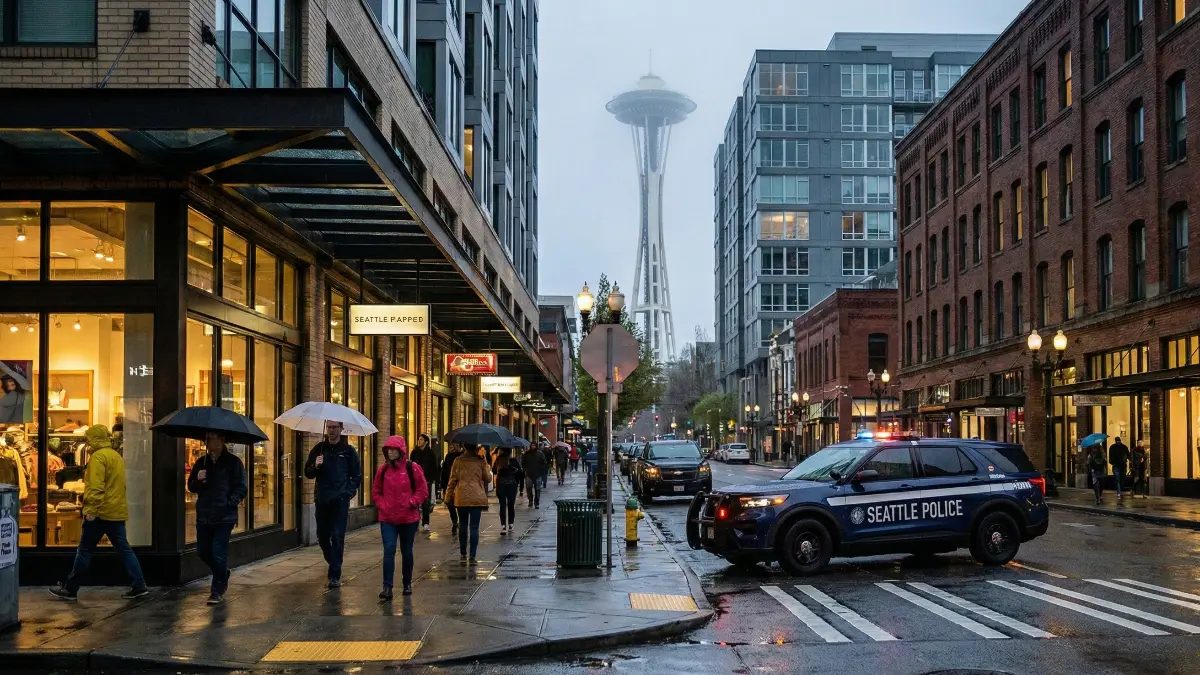
If you Google “Is Seattle Safe?”, you will get two very different answers.
The national news might convince you that Seattle is a lawless wasteland of burning police cars and rampant shoplifting. Meanwhile, a local real estate blog will tell you it’s a paradise of cherry blossoms and friendly baristas, with “just a little grit.”
As we head into 2026, the reality is somewhere in the messy middle.
I have lived in this city for over a decade. I have walked home alone in Capitol Hill at 2 AM, and I have had my car window smashed in broad daylight in Ballard. I have seen the city at its absolute worst during the pandemic, and I am watching it slowly, painfully find its footing again in 2026.
This is not a sugar-coated tourism brochure. This is the SeattleWiki 2026 Safety Report, based on the latest police data, neighborhood trends, and the unwritten rules every local knows but rarely says out loud.
📊 The 2026 Snapshot: The Data vs. The Vibe
Before we get into which street corners to avoid, let’s look at the hard numbers. The narrative that Seattle is “dying” is statistically false, but the “Seattle Freeze” now extends to our crime rates.
According to the latest 2025 Year-End Crime Report released by the Seattle Police Department and King County data:
- Violent Crime is Dropping: Homicides in Seattle dropped by 36% in 2025 compared to the previous year. Shootings and aggravated assaults are also trending downward. You are statistically very unlikely to be physically attacked in Seattle compared to cities like Memphis, Detroit, or even nearby Portland.
- Property Crime is Still the King: This is the bad news. Seattle consistently ranks in the top 5 US cities for property crime. We are talking about car prowls (break-ins), package theft, and burglary. In 2025, property crime rates here were roughly 184% higher than the national average.
The Takeaway: You probably won’t get mugged, but you absolutely might get your backpack stolen if you leave it in the backseat of your Subaru.
🗺️ The Neighborhood Breakdown: Safe vs. “Sketchy”
Seattle is a city of “micro-climates” when it comes to safety. You can be on a beautiful, safe street lined with $2 million homes, walk three blocks, and find yourself in an open-air drug market.
Here is the honest 2026 assessment of the major zones.
🔴 The “Keep Your Head Up” Zones (High Alert)
These areas aren’t “no-go zones,” but they require street smarts.
1. 3rd & Pine / 3rd & Pike (Downtown Core) If there is one specific intersection to avoid in Seattle, this is it. For decades, this has been the epicenter of open-air drug dealing and erratic behavior. While the city has increased police presence in 2025, it remains unpredictable.
- Safety Tip: If you are commuting, use the Westlake Light Rail station entrances inside the shopping centers (Pacific Place or Westlake Center) rather than the street-level entrances on 3rd Ave.
2. Belltown (After Dark) Belltown is trendy, filled with condos and great bars. But at night, the vibe shifts aggressively. It has one of the highest concentrations of assaults because of the nightlife crowd mixing with a high homeless population.
- Verdict: Fine for dinner, but take an Uber home if it’s past midnight.
3. The International District (Chinatown/ID) This neighborhood is culturally rich and has the best food in the city, but it has suffered disproportionately since 2020. Public safety issues, including encampments and vandalism, are visible here.
- Verdict: Go for lunch (please support the businesses!), but be vigilant at night, especially near the 12th & Jackson bus stop.
4. Aurora Avenue North (The Strip) Specifically the stretch from 85th St to 145th St. This is historically known for illicit activity and motels. It is not a place you generally walk around for leisure.
🟢 The “Safe Havens” (Low Crime)
If you are looking for a quiet place to live or walk your dog at night, these neighborhoods consistently rank as the safest:
1. Magnolia Physically separated from the rest of the city by a bridge, Magnolia feels like a 1950s suburb. Violent crime is almost non-existent here. It’s quiet, wealthy, and very boring—which is exactly what some people want.
2. Upper Queen Anne While Lower Queen Anne (near the Climate Pledge Arena) has some car break-ins, the top of the hill is incredibly safe. The steep hill acts as a natural barrier to crime (criminals hate walking up hills too).
3. West Seattle (The Junction & Alki) Despite the “island” vibe, West Seattle remains very safe, particularly the residential streets away from the immediate beach strip. It has a strong community watch culture.
4. Green Lake / Roosevelt Very family-friendly. The loop around the lake is safe to jog, even in the evening, because it is always populated with other runners.
🚗 The “Bipping” Epidemic: Protecting Your Car
“Bipping” is slang for smashing a car window to grab valuables. In Seattle, this is not a crime of opportunity; it is a sport.
If you bring a car to Seattle in 2026, you must follow these rules religiously.
- The “Nothing Visible” Rule: Do not leave anything in your car. Not a charging cable, not a few coins in the cup holder, and definitely not a bag. I once had a window smashed for a bag of dirty gym clothes.
- Out-of-State Plates: Thieves target cars with non-Washington plates because they assume you have luggage. If you are visiting, park in a secured garage, not on the street overnight.
- The “Club”: Yes, the steering wheel lock from the 90s is back. With Kia and Hyundai thefts still high in 2025, having a visible deterrent actually works.
🚆 Public Transit Safety: Is the Light Rail Safe?
With the Link Light Rail expanding to Lynnwood and Redmond in 2025/2026, more people are riding than ever.
- The Reality: The Light Rail is generally safe, especially during commute hours (7 AM – 7 PM).
- The Changes: In 2025, Sound Transit deployed significantly more Transit Security Officers (TSOs). You will see them patrolling trains and platforms more often than in previous years.
- The “Bus vs. Train” Debate: The Light Rail is safer and cleaner than the bus system. If you take the bus (especially the E-Line or the 7), expect to see people slumped over or using drugs in the back. It is usually sad rather than dangerous, but it can be jarring for newcomers.
Pro Tip: On the Light Rail, sit in the first car (near the operator). It is always the safest and cleanest car on the train.
⛺ Homelessness vs. Danger: Understanding the Difference
You cannot talk about Seattle safety without talking about the homelessness crisis.
In 2026, you will still see tents. You will see people in mental health crises shouting at the air.
- Crucial Distinction: Most unhoused people in Seattle are struggling with addiction or poverty and are not aggressive toward passersby. The “danger” is often overstated by outsiders.
- The Protocol: If you see someone erratic, simply cross the street. Do not engage, do not stare, and do not take photos (which is incredibly rude and escalatory). Just keep moving.
🛡️ Urban Safety Gear: What Should You Carry?
I am not suggesting you walk around in tactical gear, but carrying basic safety tools is common here, especially for women or night-shift workers.
- High-Lumen Flashlight: Seattle is dark. In winter, the sun sets at 4:15 PM. A powerful flashlight (500+ lumens) is better than a weapon—it blinds a potential aggressor and illuminates dark sidewalks.
- Personal Alarm (Birdie): These keychains emit a deafening siren when pulled. They are great for drawing attention if you feel threatened on the Light Rail.
- Gel Pepper Spray: If you choose to carry spray, buy the Gel version, not the mist. Seattle is windy; mist will blow back in your face. Gel shoots in a straight stream.
🚨 Emergency Resources (Save These Numbers)
If you are in immediate danger, always call 911. However, Seattle has alternative numbers for non-emergencies which often get a faster response.
- Non-Emergency Police Line: (206) 625-5011 (For reporting a break-in that already happened).
- Community Safety & Health (Mental Health Crisis): 988.
- Find It, Fix It App: Download this immediately. It’s the official city app to report graffiti, dumped trash, or broken streetlights. The city actually responds to these requests surprisingly fast.
The Verdict
Is Seattle safe? Yes, mostly. It is safer than St. Louis, New Orleans, or Baltimore. But it is not the sleepy fishing village it was in the 90s. Treat it like any major coastal city: Keep your head on a swivel, protect your property, and maybe don’t walk through that one alley in Belltown at 2 AM.
Stay safe out there, and welcome to the neighborhood.