
Key Takeaways
- Washington State's Senate Bill 6002 (SB 6002) has prompted multiple law enforcement agencies in King County, including Renton, Seattle, and Pierce County, to temporarily halt or reevaluate their Automated License Plate Reader (ALPR) systems to comply with new privacy regulations.
- Significant privacy concerns, including potential mass surveillance and the documented access of ALPR data by out-of-state agencies for immigration enforcement, were a primary driver for the new legislation and led cities like Lynnwood to terminate their ALPR contracts.
- While law enforcement agencies emphasize the investigative value of ALPRs, citing successes like a 25% increase in
Across King County, law enforcement agencies are navigating new state regulations governing Automated License Plate Readers (ALPRs), leading to temporary shutdowns and policy overhauls. The Renton Police Department (RPD) has paused its Flock Safety ALPR cameras, directly complying with Senate Bill 6002, a landmark piece of legislation enacted to define and restrict their operational parameters.
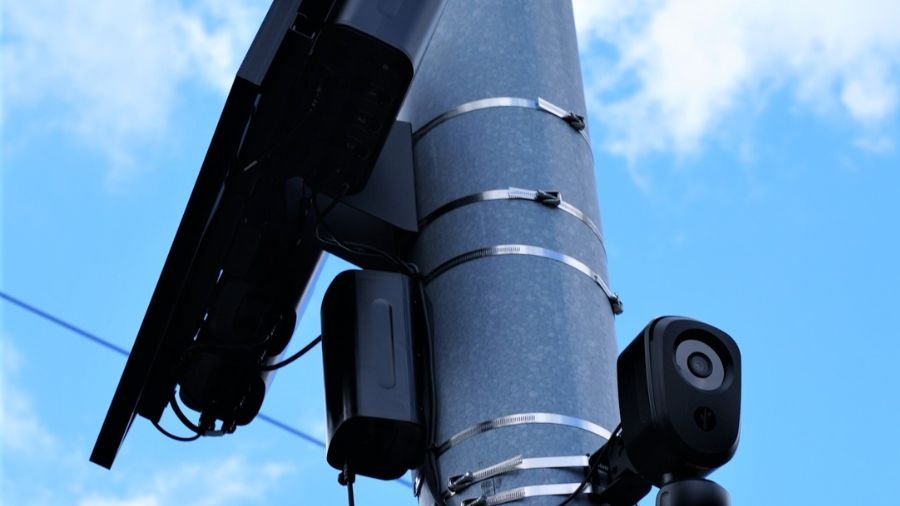
Flock Safety cameras utilize artificial intelligence to identify and record vehicle characteristics, including license plates. This data is then made available for law enforcement investigations. The City of Renton clarified that “Flock cameras function as investigative tools, capturing still images of vehicles and license plates; they are not live surveillance feeds or facial recognition systems. Officer access to this data is strictly limited to legitimate crime-related justifications, with all searches meticulously logged for accountability.”
Renton Police Grapple with Policy Shift Amidst Crime-Solving Success
Renton Police Chief John Schuldt has affirmed the instrumental role ALPRs play in crime resolution, noting their shutdown since March 31, 2026, to allow the city to establish new privacy guidelines in line with state mandates. The RPD is actively revising departmental policies, conducting specialized training, and collaborating with camera vendors to implement necessary software updates to ensure full compliance with SB 6002. The department, however, has expressed a desire to reactivate the devices as swiftly as possible.
Chief Schuldt highlighted that ALPRs have contributed to a 25% increase in stolen vehicle recoveries, underscoring their investigative value. The current pause in their operation has already impacted ongoing cases, including a recent homicide investigation originating outside city limits where a suspect vehicle traveled through Renton, passing potential ALPR collection points.
In December 2025, the RPD expanded its public safety infrastructure by installing 24 new Flock Safety cameras. This expansion reignited significant privacy concerns among advocates, who raised alarms about potential mass surveillance and misuse by federal immigration authorities. These concerns were a driving force behind the passage of Washington state’s first law regulating such devices.
Washington Governor Bob Ferguson emphasized the critical need for the new legislation to safeguard community privacy. “This legislation also upholds Washington’s constitutional principles,” Governor Ferguson stated, “requiring us to respect individual privacy whenever we adopt technology, especially surveillance tools.”
Renton now joins a growing list of Puget Sound municipalities that have paused or reevaluated their ALPR systems following SB 6002’s enactment. This includes:
- Seattle
- Redmond
- Lynnwood
- Pierce County
Lynnwood’s Precedent-Setting Contract Termination
Earlier this year, in February 2026, Lynnwood became the first city in Washington to terminate its contract with Flock Safety, citing overwhelming privacy concerns. The Lynnwood City Council voted unanimously, 7-0, to end the agreement after a comprehensive report from the University of Washington (UW) revealed that out-of-state agencies were accessing Lynnwood’s ALPR data, including for immigration enforcement purposes.
The city’s engagement with Flock Safety began in January 2026, when the Lynnwood City Council unanimously approved a two-year, $171,000 contract for 25 automated license plate readers. The technology became operational in Lynnwood in June 2026. However, Lynnwood Police Chief Cole Langdon subsequently discovered that despite departmental intentions to limit access solely to in-state agencies via user agreements, the system permitted out-of-state entities to retrieve data.
Seattle Mayor Orders Audit, Pauses Expansion Amidst Civil Rights Concerns
In mid-March 2026, Seattle Mayor Katie Wilson announced a halt to the planned expansion of the city’s surveillance camera pilot program. While existing cameras will continue to operate, the mayor initiated an audit to scrutinize the program’s civil liberties implications. “I am temporarily pausing this expansion until a thorough audit can be completed and stronger protective measures are established,” Mayor Wilson declared. “This audit will specifically assess whether our current policies and practices adequately address potential risks to civil rights and civil liberties.”
Mayor Wilson cited unresolved privacy, data security, and governance issues as key motivators for her decision. The city’s Real-Time Crime Center commenced operations in April 2026. “This decision transcends just cameras,” she remarked. “It’s about our approach to public safety, fostering community trust, and effectively serving all neighborhoods across our city. It’s imperative that we get this right.”
Furthermore, Mayor Wilson confirmed that the city would disable all cameras if a U.S. Immigration and Customs Enforcement (ICE) surge were to occur, a preventative measure against potential federal authority overreach. “While these cameras can be useful for solving crimes, they are not the sole solution to our public safety challenges. I have not seen evidence suggesting they deter or prevent crime; their utility lies primarily in investigation,” she added.
As part of this broader review, Mayor Wilson also announced a temporary pause on the Seattle Police Department’s use of ALPRs until policies and practices are fully aligned with state law.
Pierce County Sheriff Warns of Undetected Criminal Activity
Pierce County Sheriff Keith Swank, a staunch critic of SB 6002, responded to the new state law by deactivating his entire automatic license plate reader system. Sheriff Swank contended that the system is now rendered ineffective under the bill’s provisions. “We could be inadvertently overlooking stolen vehicles or cars associated with homicide suspects,” Sheriff Swank asserted. “These cameras provide a crucial distinction between criminals and law-abiding citizens, and we are now deprived of that essential tool.”