From “Panic Buttons” for Janitors to the $21 Minimum Wage: Here is What Changed on January 1st
SEATTLE — The confetti from New Year’s Eve has been swept away, but for millions of Washingtonians, the hangover from January 1st comes with a new set of rules.
As of this week, a slate of new legislation has officially gone into effect across Washington State. While some laws are minor administrative tweaks, others will fundamentally change how we work, drive, and rent homes in the Pacific Northwest.
If you are a gig worker in Seattle, a hotel housekeeper in Spokane, or a landlord in King County, ignorance of these laws is not a defense. The 2026 legislative session updates are focused heavily on labor protections and wage adjustments, reflecting the state’s continued push toward worker equity.
Here is the definitive breakdown of the most important Washington State new laws 2026 that you need to know right now.
1. The “Isolated Worker” Protection Act (Expansion)
Perhaps the most significant change for the service industry is the expansion of the “Panic Button” law (HB 1524).
Originally designed for hotel housekeepers to prevent sexual harassment and assault, the law has now expanded its umbrella. Effective January 1, 2026, contracted janitors, security guards, and retail workers who work alone (isolated) must also be provided with emergency signaling devices.
Who is Covered Now?
If you work a night shift as a cleaner in an office tower or a lone security guard patrolling a lot, your employer is now legally required to provide you with a panic button.
- The Device: It must be provided at no cost to the employee.
- The Function: It must effectively summon immediate assistance or security.
- Retaliation Prohibited: Employers cannot fire or discipline a worker for using the device if they reasonably believed they were in danger.
What Employers Must Do
Businesses found non-compliant by the Department of Labor & Industries (L&I) face steeper fines this year. If you have not received your device yet, you should speak to your HR department immediately.
2. Minimum Wage: The 2026 Jump
Inflation may have cooled slightly, but the cost of living in the Evergreen State has not. To keep up, both the state and the city of Seattle have triggered automatic wage increases.
Washington State Minimum Wage ($17.28/hr)
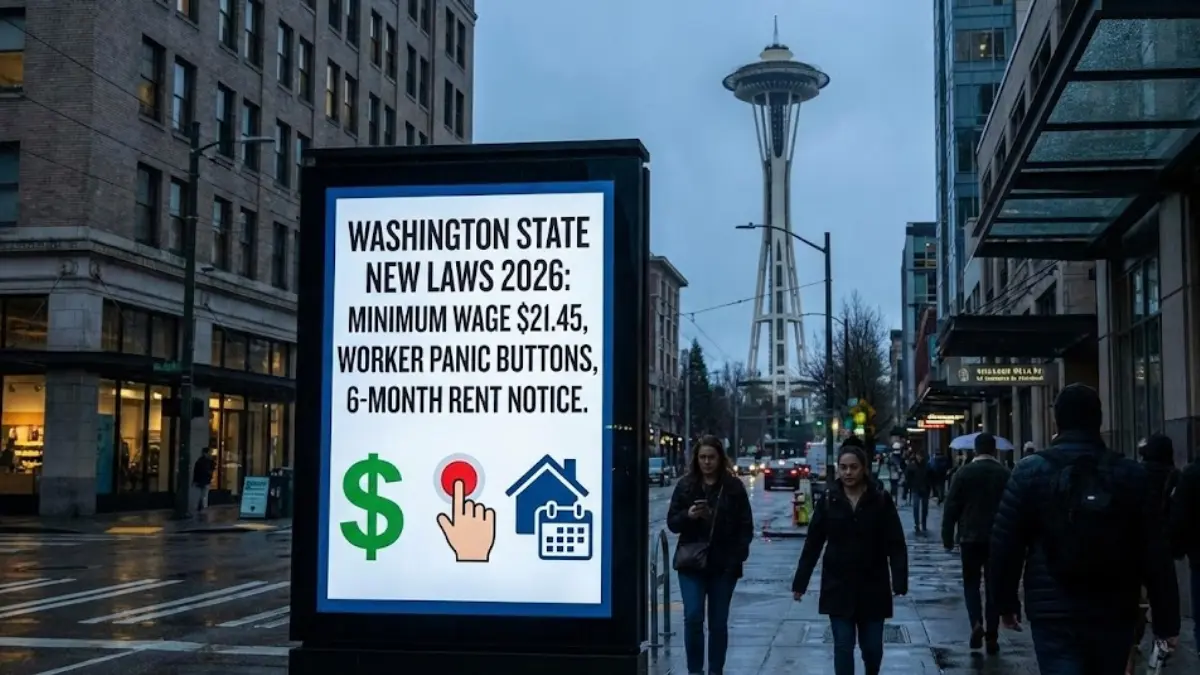
The statewide minimum wage has increased to $17.28 per hour (up from the 2025 rate). This applies to all workers regardless of tip status—Washington remains one of the few states that does not allow a “tip credit.” If you are a server or bartender, you must earn the full $17.28 plus tips.
Seattle Minimum Wage ($21.45/hr)
Seattle continues to have one of the highest wage floors in the nation.
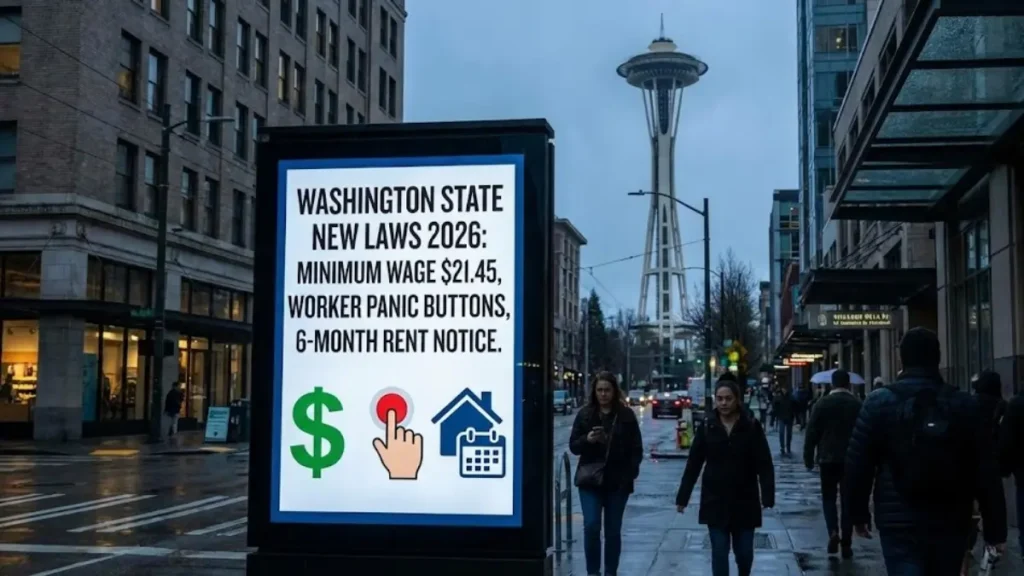
- Large Employers: For companies with 501+ employees, the minimum wage is now $21.45 per hour.
- Small Employers: The gap for smaller businesses is closing. Most small employers must now pay at least $19.97 per hour, or the full $21.45 if they do not pay significantly toward medical benefits or employee tips.
Tip for Workers: Check your first paycheck of January 2026 carefully. Wage theft (even accidental) is most common in the first month after a rate hike.
3. The “Hate Crime” Paid Leave Amendment
Washington has expanded its definition of what qualifies for Paid Sick and Safe Leave.
Under the new 2026 provisions, employees can now use their accrued paid sick leave if they are a victim of a documented hate crime or bias-motivated incident. This closes a loophole that previously only allowed “Safe Leave” for domestic violence situations.
- Allowed Uses: Seeking legal assistance, medical treatment for physical or mental injuries, or relocating for safety reasons.
- Documentation: Employers are limited in what proof they can demand, to protect the privacy and dignity of the victim.
4. Renters’ Rights: The 6-Month Notice Rule
Housing stability remains a crisis point, and Olympia has responded with stricter rules for landlords, particularly regarding rent hikes.
While statewide rent control was voted down, a new transparency law is in effect. Landlords must now provide 6 months’ written notice for any rent increase of 5% or more.
- The Old Rule: previously, it was 60 days in many jurisdictions (outside of Seattle).
- The Impact: If your landlord wants to raise your rent from $2,000 to $2,200 (a 10% hike) starting in July, they needed to tell you this week.
- Tenant Loopholes: Renters who receive a notice of a 5%+ increase can break their lease early without penalty, provided they give 20 days’ notice. This is designed to let tenants escape unaffordable hikes before they take effect.
5. Traffic & Safety: Automated Cameras & E-Bikes
If you drive in urban centers like Seattle, Tacoma, or Bellevue, keep your eyes on the road—and the speed limit signs.
Work Zone Speed Cameras
After a successful pilot program, automated speed cameras are now authorized for permanent installation in active highway construction zones statewide.
- The Trigger: Driving 11+ mph over the posted work zone limit.
- The Fine: Tickets are mailed to the registered owner. They are treated like parking tickets (no insurance points), but the cost has risen to $248.
E-Bike Reclassification
As electric bikes explode in popularity, WA State has clarified the rules for 2026.
- Sidewalk Riding: Class 3 E-bikes (which can go up to 28mph) are now strictly banned from sidewalks statewide.
- Helmet Law: The state has reinforced that helmets are mandatory for all E-bike riders under 18, with police authorized to issue warnings to parents.
6. Gun Safety: Mandatory Training Renewal
Washington continues to tighten firearm regulations. The Firearm Safety Training Requirement (passed previously) has an updated clause effective Jan 1, 2026.
Gun owners hoping to purchase a firearm must now show proof of a safety training course completed within the last 3 years (previously 5 years). This effectively forces more frequent recertification for prospective buyers.
- Waiting Period: The mandatory 10-day waiting period remains in full effect for all firearm purchases, with no exceptions for Concealed Pistol License (CPL) holders.
7. Climate: The “Styrofoam” Ban Final Phase
You might have noticed that takeout containers have changed. That is because the final phase of the Washington Plastic Pollution Reduction Act is now live.
- Banned Items: Expanded polystyrene (Styrofoam) coolers and packing peanuts are now prohibited from sale or distribution in the state.
- Food Service: This extends to single-use plastic utensils and condiments. Restaurants are no longer allowed to bundle these automatically; they must be provided only upon request. If your UberEats order is missing a fork, this law is why.
How to Comply (For Business Owners)
If you own a small business in Seattle or King County, January is your month of paperwork.
- Update Your Posters: The mandatory “Your Rights as a Worker” poster from L&I has been updated for 2026. You must display the new version in a breakroom or digital hub immediately.
- Audit Payroll: Ensure your payroll software is updated with the new $21.45 (Seattle) or $17.28 (WA) rates.
- Check Safety Gear: If you employ isolated workers, audit your panic button inventory.
Conclusion: A Year of “Worker Power”
The theme of the Washington State new laws 2026 is clear: protection for the vulnerable.
Whether it is ensuring a janitor can signal for help, guaranteeing a living wage for a barista, or giving a renter enough time to find a new apartment, the legislature has prioritized stability over deregulation.
For residents, the advice is simple: Know your rights. If you are not paid the new minimum wage or if your landlord tries a surprise rent hike, the law is now firmly on your side.
Frequently Asked Questions (FAQ)
Q: What is the minimum wage in Washington State for 2026?
A: The statewide minimum wage is $17.28 per hour. This applies to all workers, including those in tipped positions.
Q: Did Seattle’s minimum wage go up in 2026?
A: Yes. For large employers (501+ staff), the rate is now $21.45 per hour. Small employers pay $19.97 per hour if they contribute to medical benefits.
Q: What is the new “Panic Button” law?
A: It is an expansion of the Isolated Worker Protection Act. It requires employers to provide emergency signaling devices to contracted janitors, security guards, and retail workers who work alone, not just hotel staff.
Q: Can my landlord raise my rent in 2026 without notice?
A: No. Under the new transparency rules, landlords must provide 6 months’ written notice for any rent increase of 5% or more.
Q: Are styrofoam coolers illegal in Washington now?
A: Yes. The final phase of the Plastic Pollution Reduction Act bans the sale and distribution of expanded polystyrene coolers and packing peanuts effective Jan 1, 2026.
Q: Do I need a new safety class to buy a gun in WA?
A: Yes, if your previous training is older than 3 years. The new requirement mandates proof of training completed within the last 36 months for all firearm purchases.
Q: Is “Hate Crime” leave paid?
A: Yes. Victims of hate crimes can now use their accrued Paid Sick and Safe Leave to seek legal or medical help related to the incident.